Concrete Driveway Building
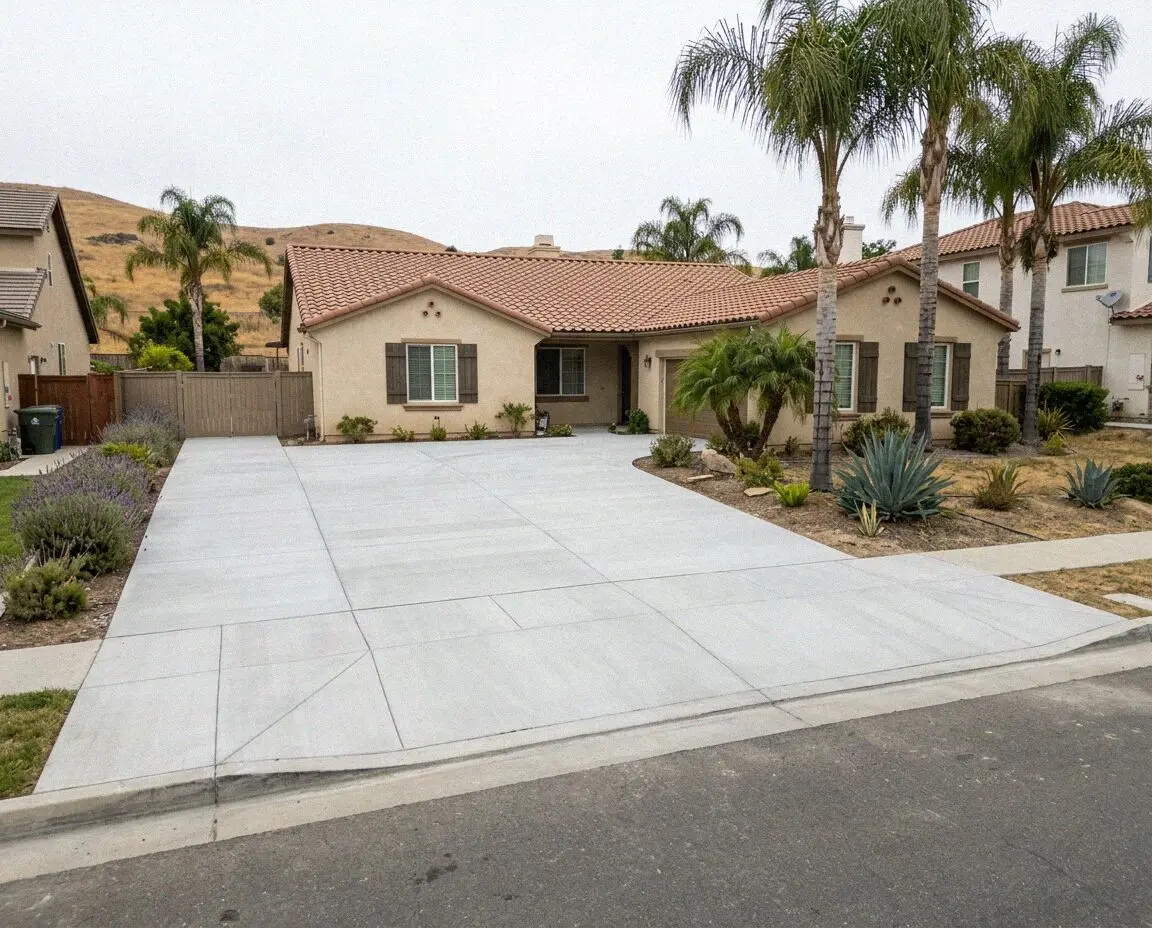
Rust coming up through the old drive? A new one poured with no steel where cars park, a low-water mix and a seal once cured keeps salt out.

Pool decks, patios, driveways and slab foundations for homes across Huntington Beach and coastal Orange County. Call for a free estimate, measured at your property and written before you decide anything.


 5.0 Stars Rated by our customers · Google, Facebook and the BBB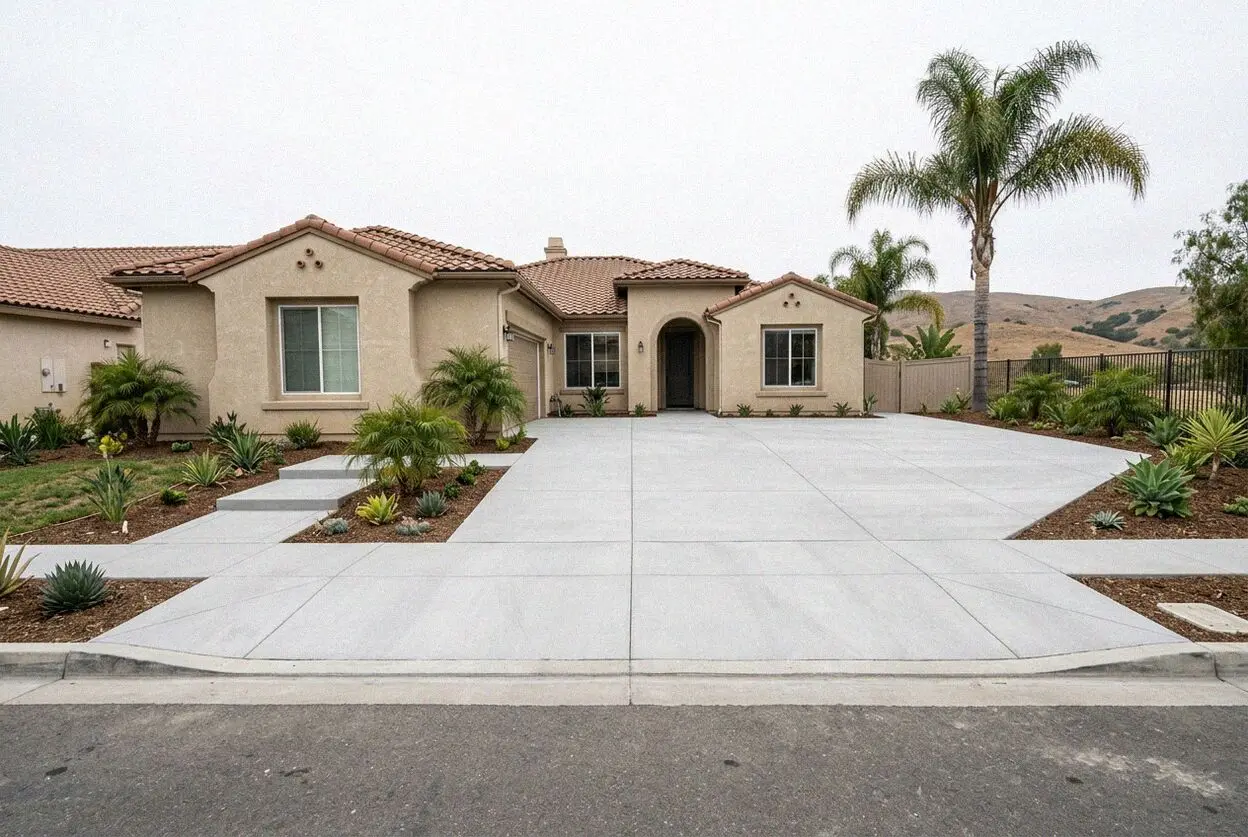
Goldenwest Huntington Beach Concrete pours across Huntington Beach and the beach cities either side of it. A pool deck around a 1970s pool, a driveway widened for a boat trailer or a new slab under a garage conversion, the crew forms, pours and finishes it to the California Residential Code.
Rust coming up through the old drive? A new one poured with no steel where cars park, a low-water mix and a seal once cured keeps salt out.
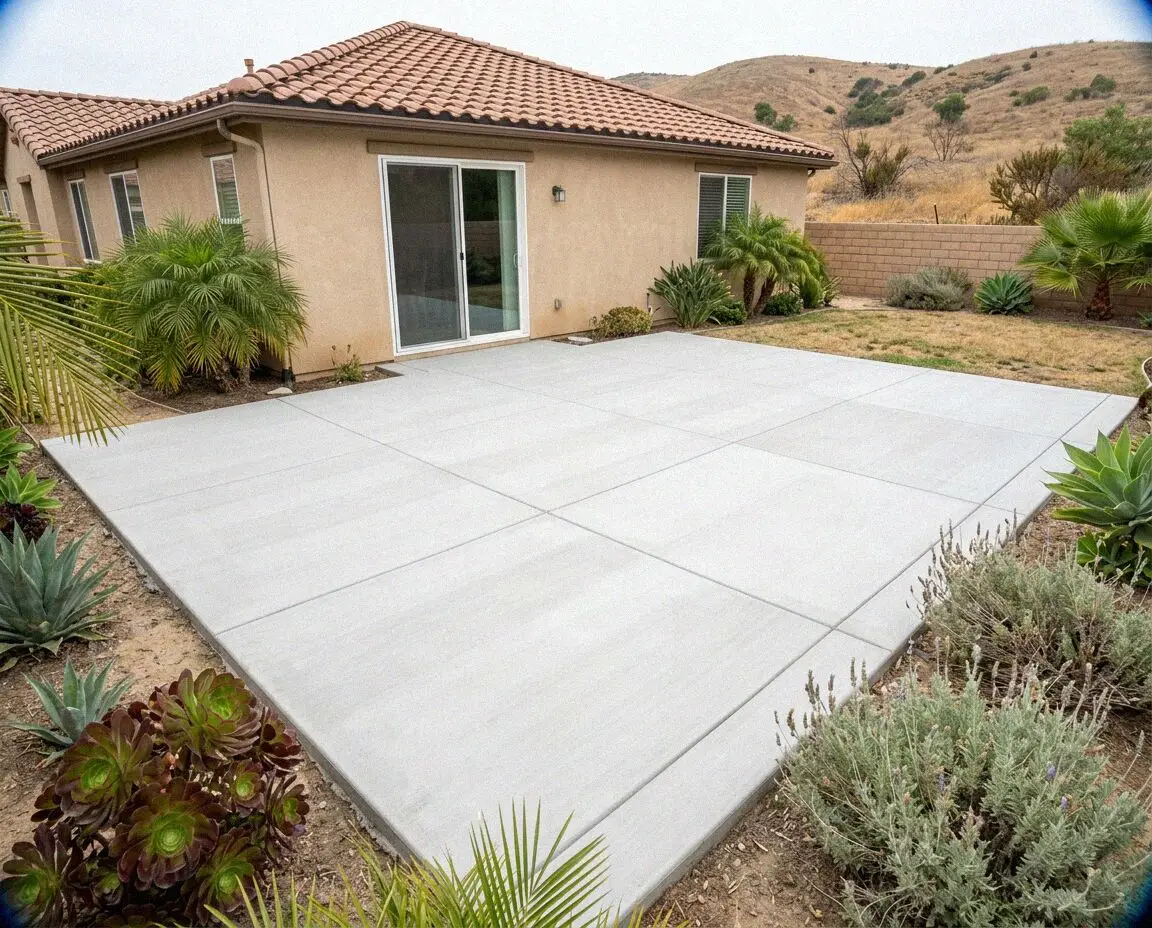
Old patio dropping at the lawn edge? A new slab with an 8-inch lip all round, on rock laid past the form, holds its edge on sand for decades.
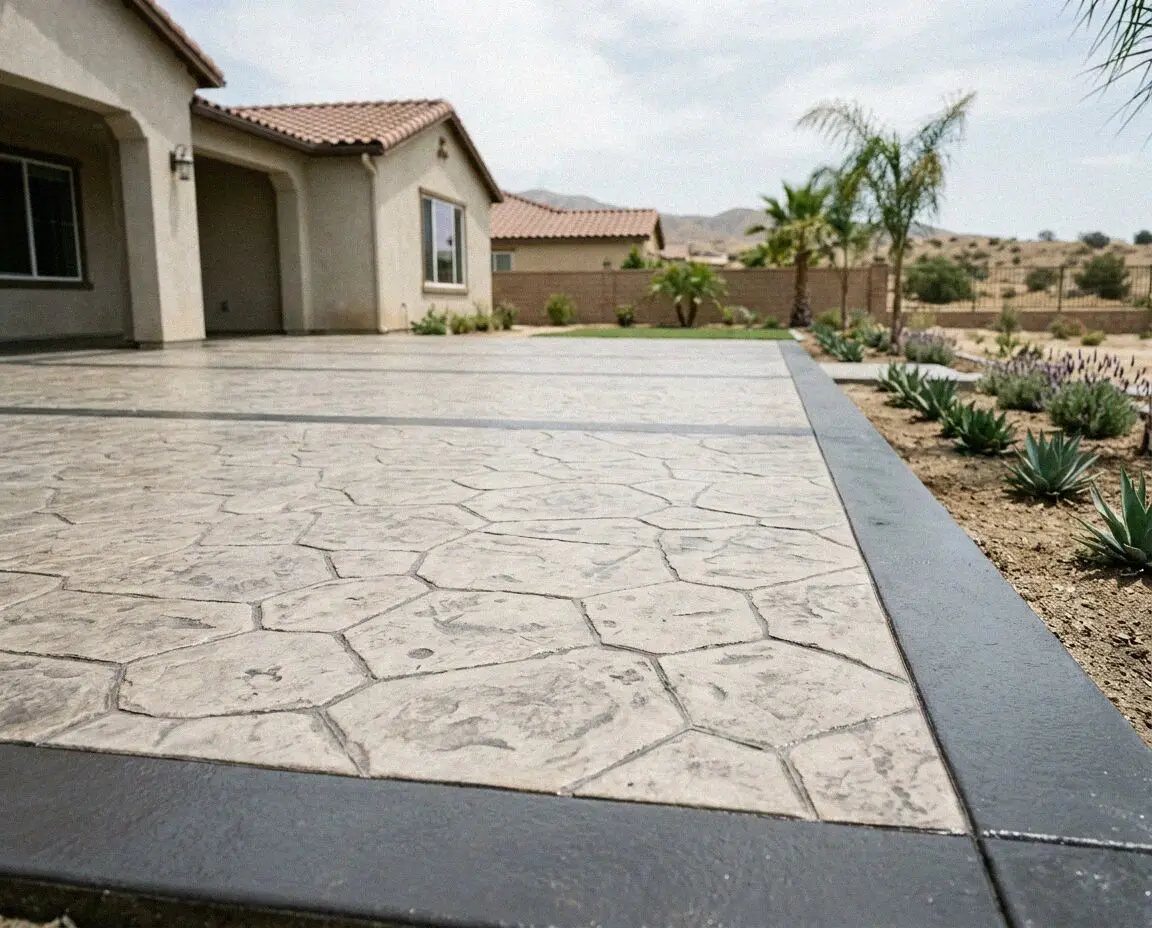
Faded, patched pool deck? A stamped slab colored through the mix and sealed for salt air keeps its pattern under bare feet for decades.
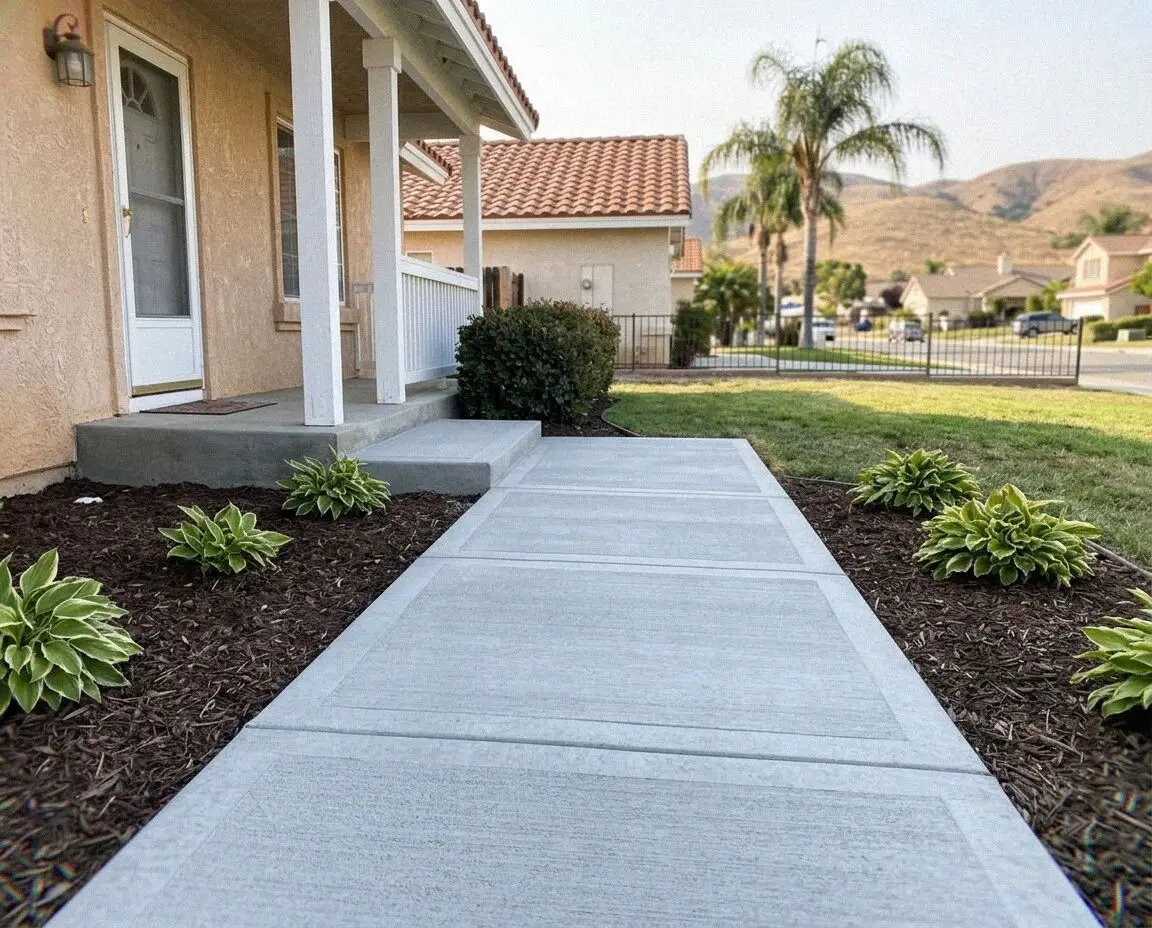
Sidewalk panels rocking or marked by the City? A new walk on a rock base that drains, doweled to its neighbors, stays level for 30 years.
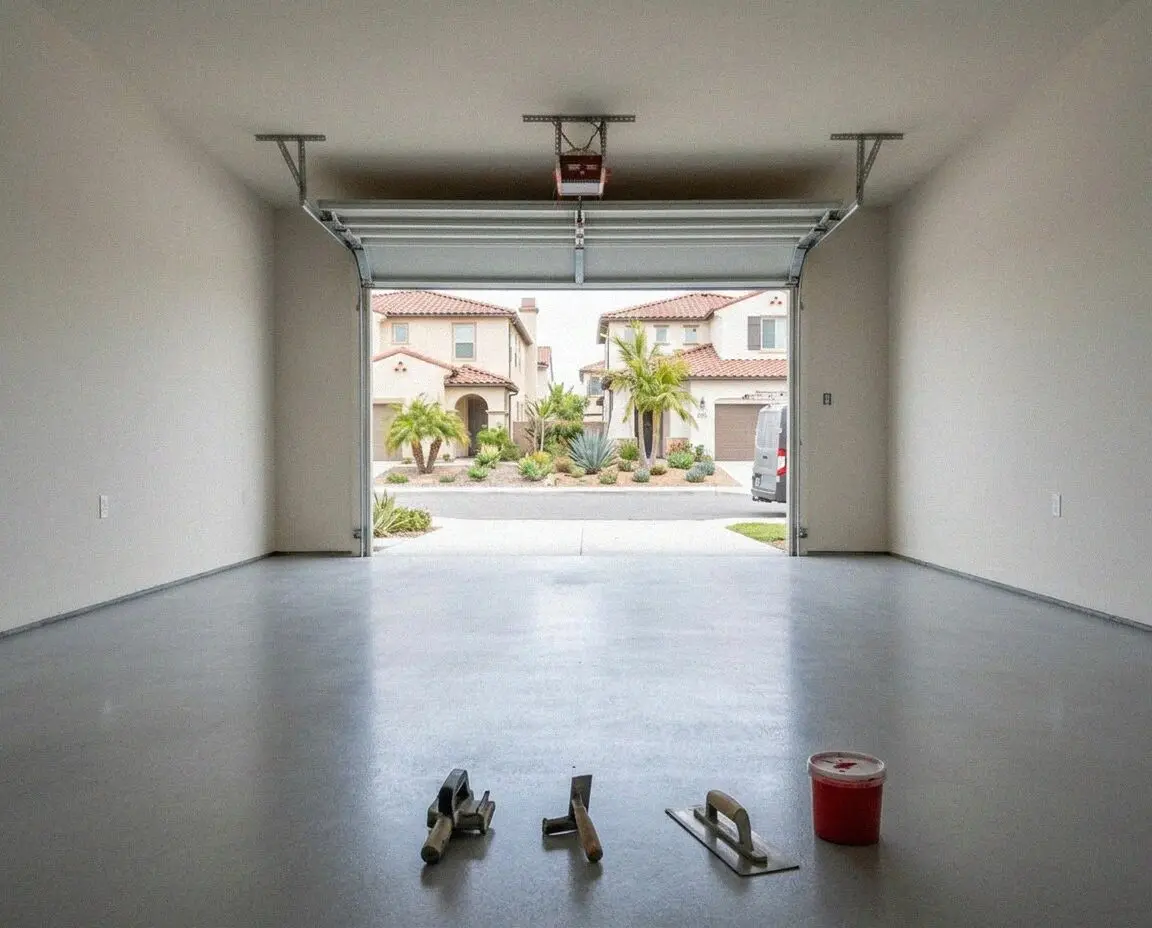
A bay floor poured dense over a sheet, falling to the door and sealed, so the salt water and sand a car brings home drain and dry off it.
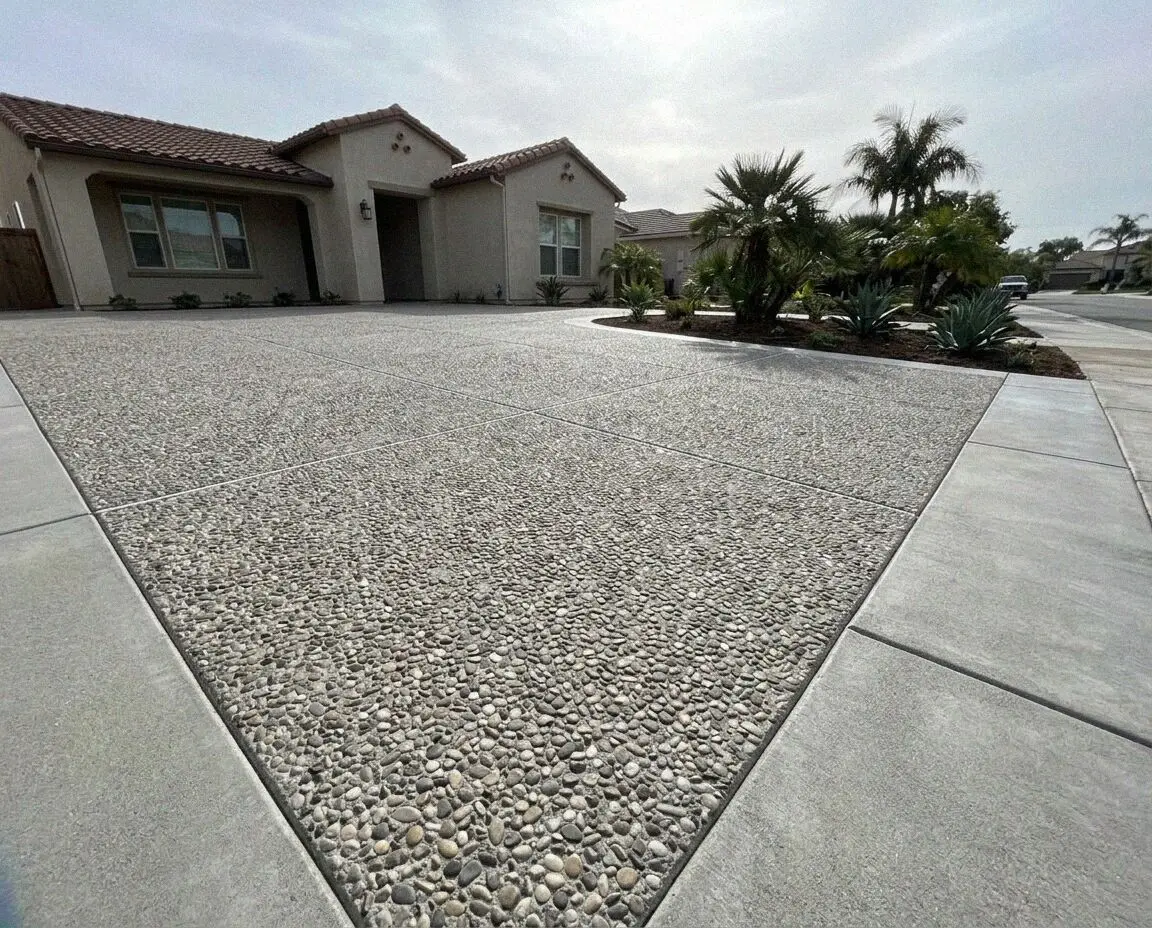
Exposed aggregate, salt and colored finishes with the pigment through the batch and a sheet beneath, so the salt here never whitens them.
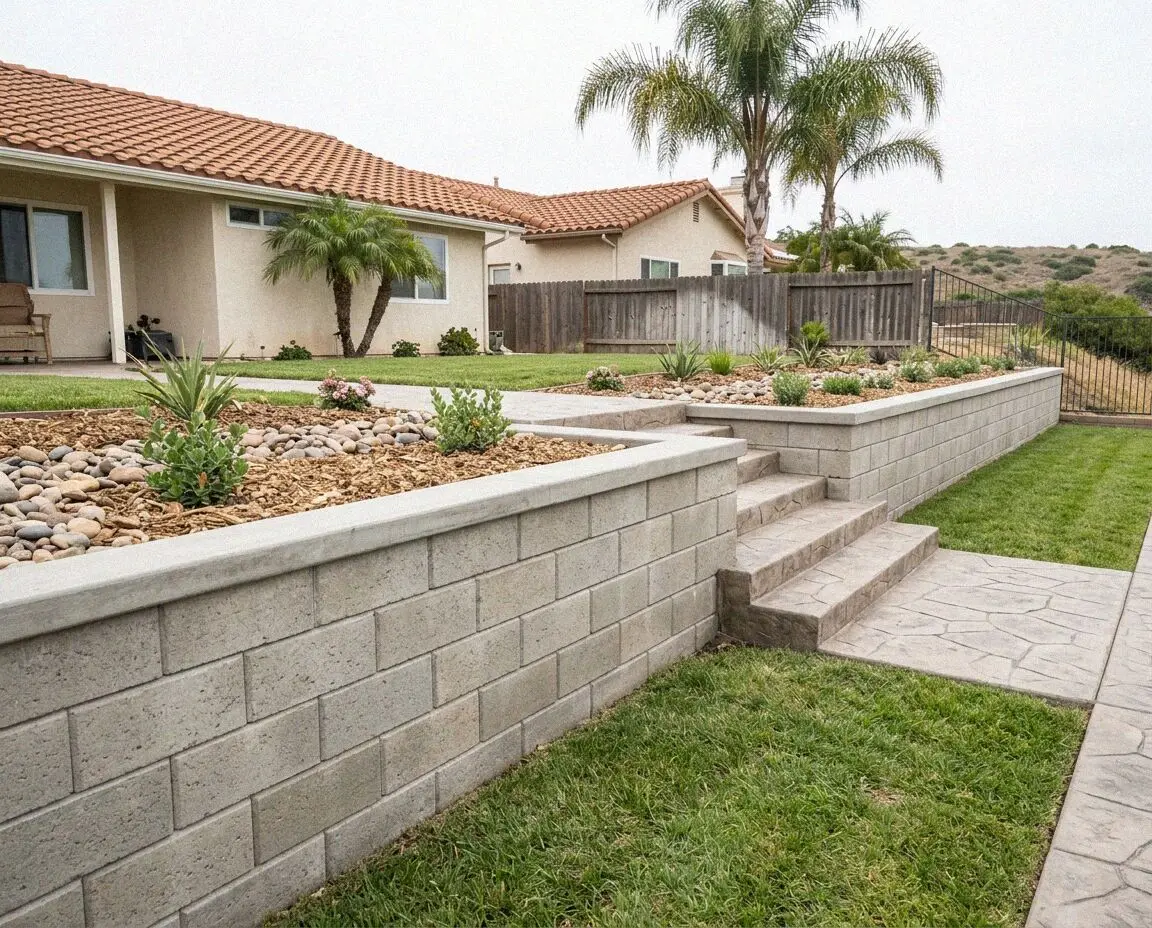
Leaning block wall, or a step the sand washes through? A poured wall footed in firm sand and drained at the heel, built for water not height.
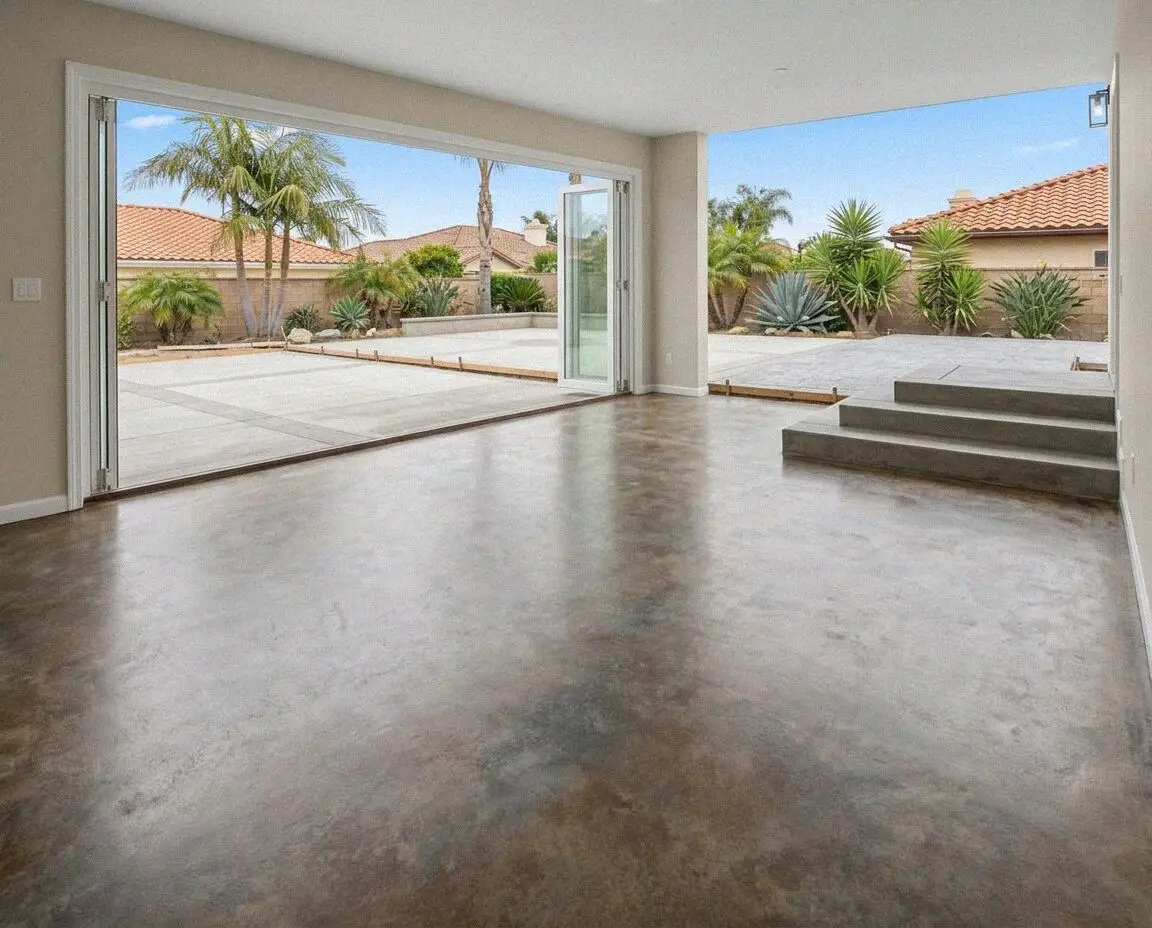
Damp carpet, or plank lifting at the seams? A floor built up on a compacted pad, 4 inches on rock and a taped sheet, above the water table.
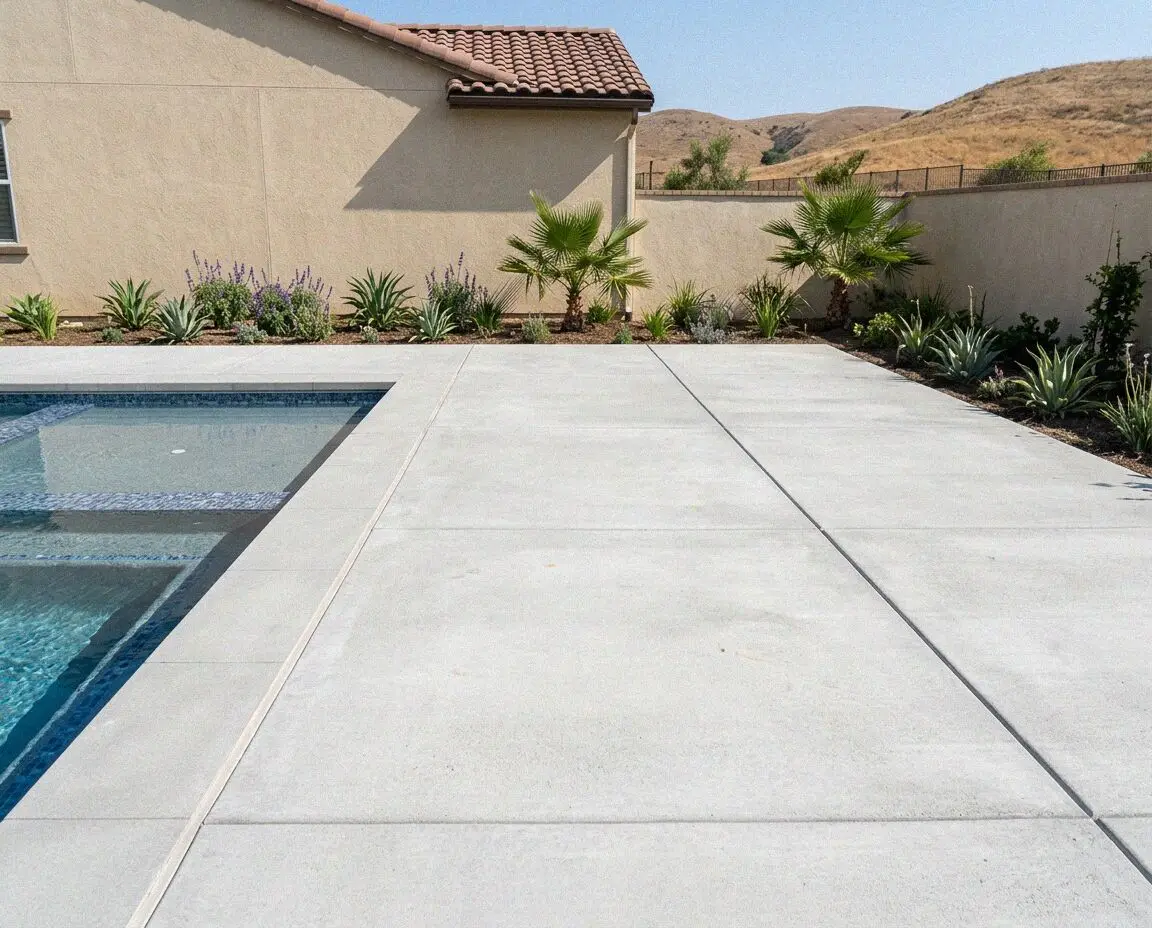
A new deck around an older pool, mixed dense and sealed against the salt, cut free of the coping and drained to a channel, not the house.
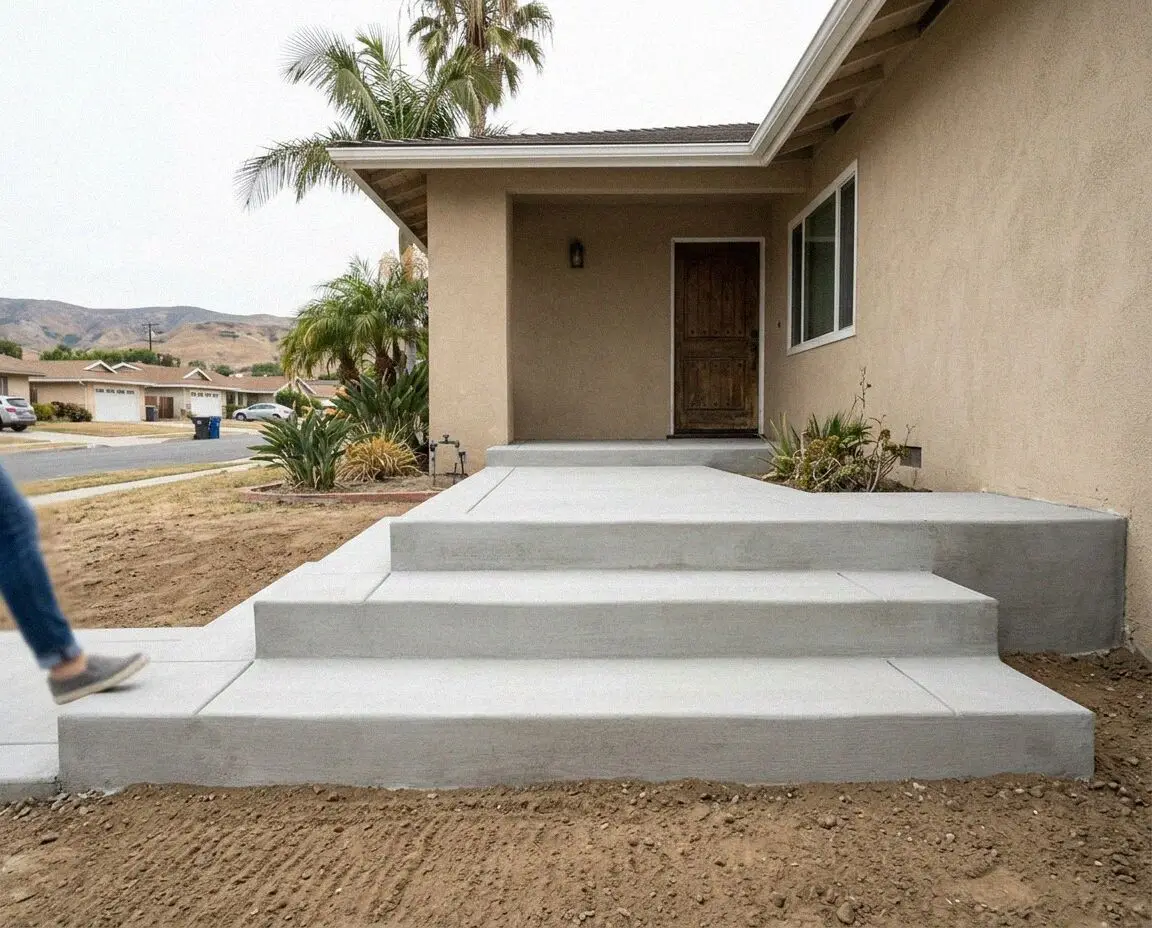
New entry or garden steps cast solid on a footing, doweled to the house, the bar held deep and the posts sleeved so the salt rusts nothing.
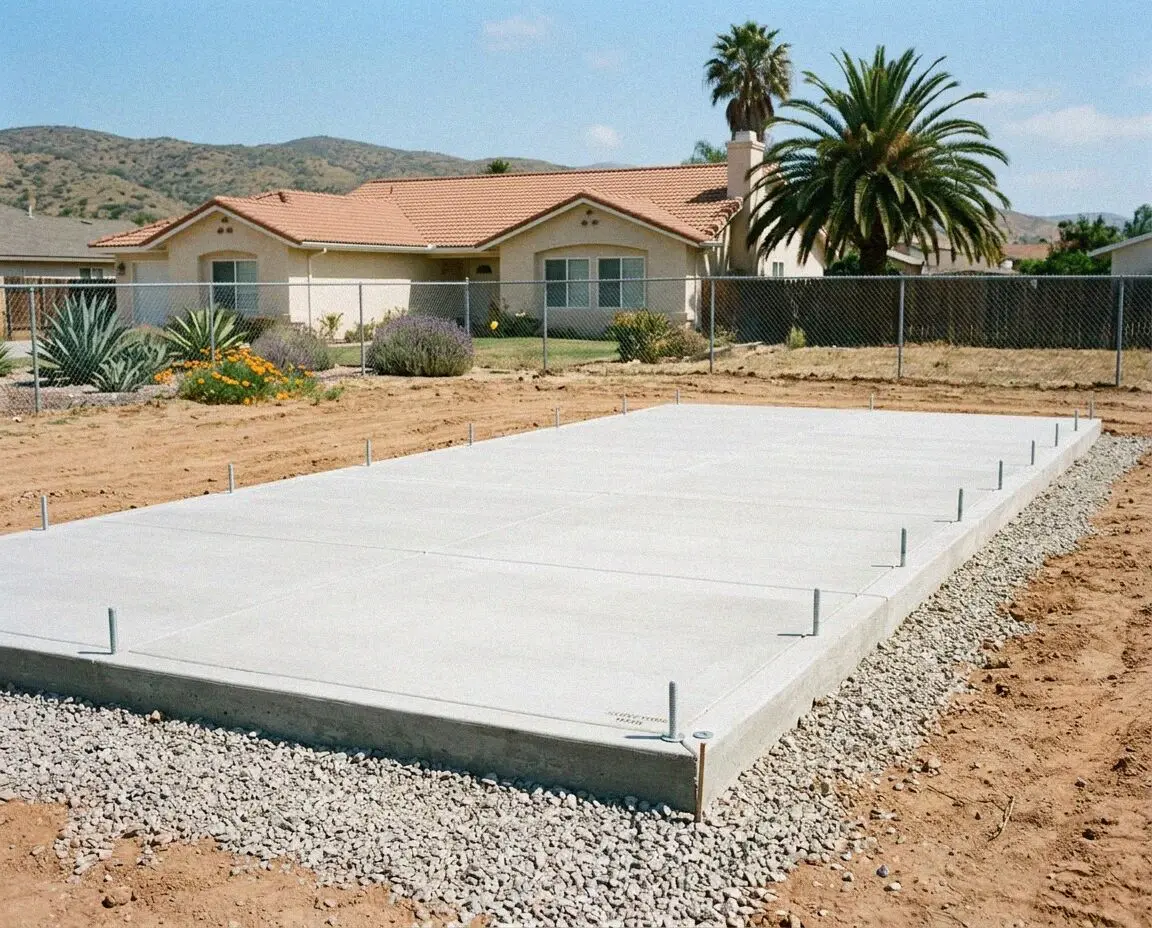
The footing and floor of a unit, a conversion or an addition poured as one slab, drawn to the soils report and the map before it is dug.
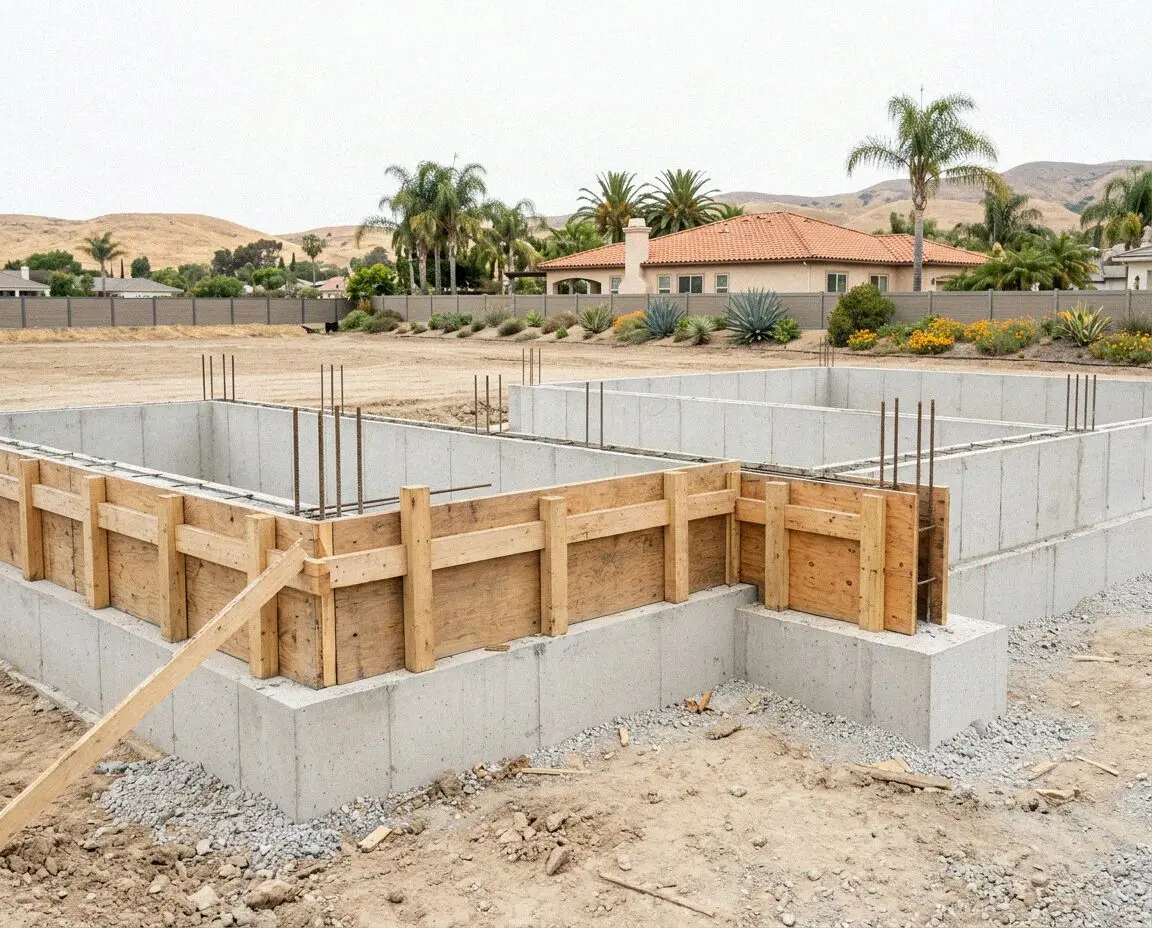
The footing, stem wall and piers a wood floor stands on, poured the day it is dug where the trench fills, formed from inside on a narrow lot.
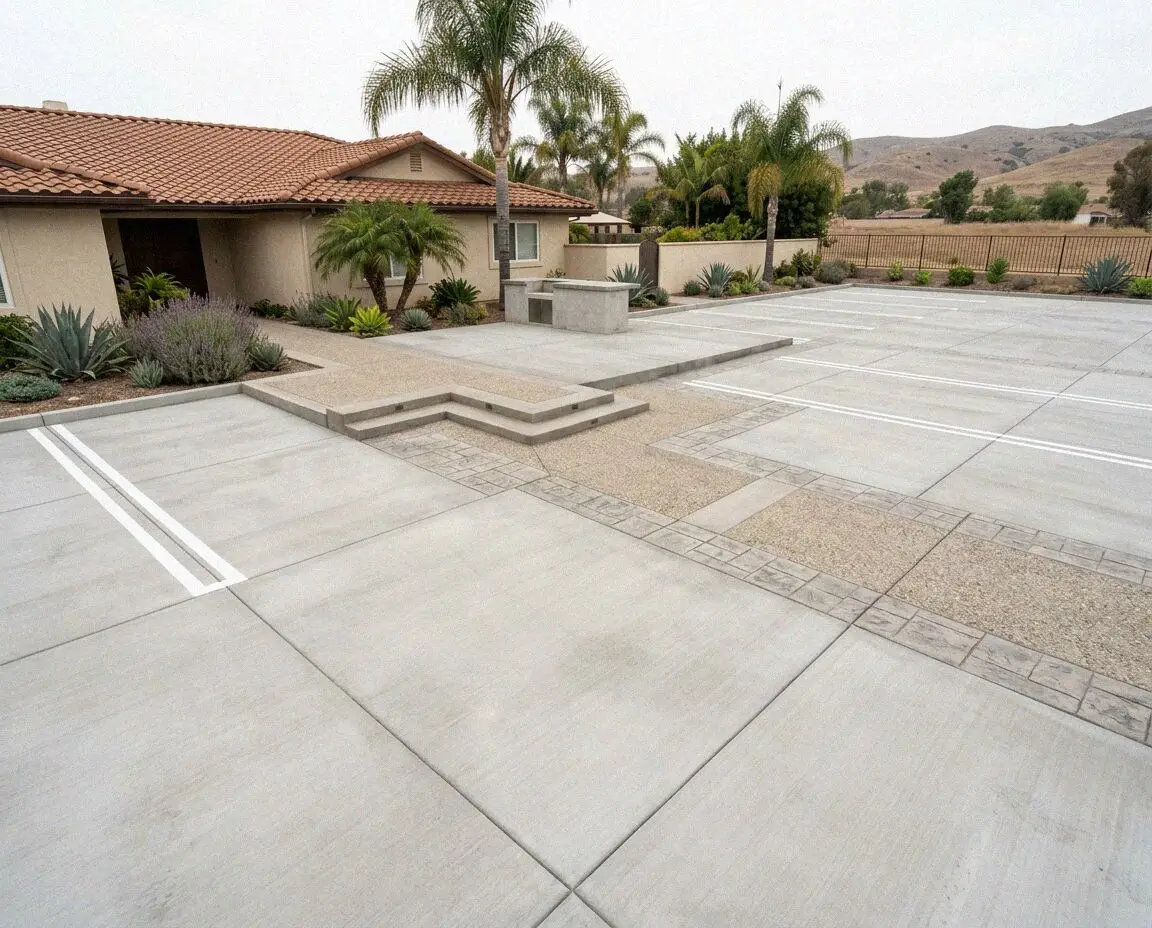
A lot built for the coast, a plain jointed slab with no mesh inside for the salt to rust, on a base drained to a basin, not into the sand.
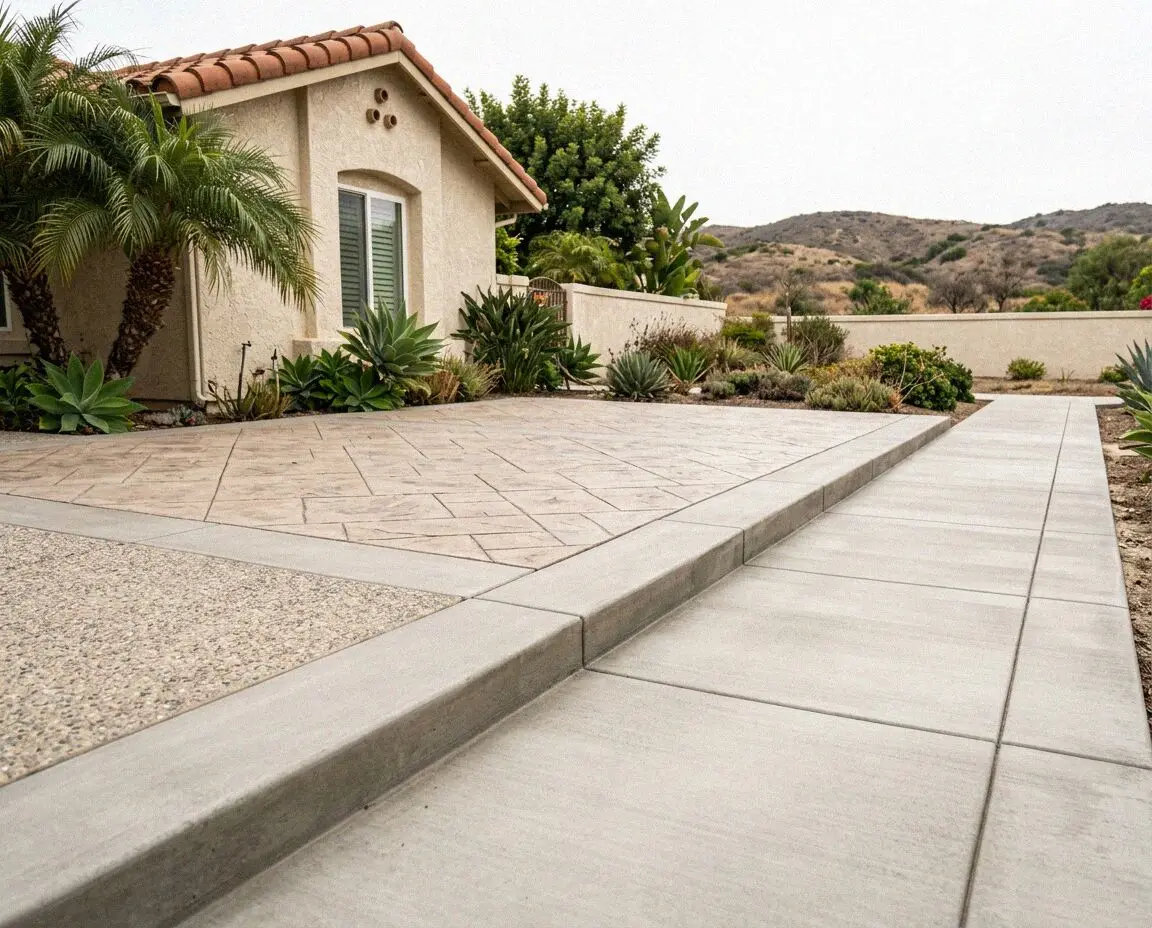
A footing built as one continuous beam, bars top and bottom and doweled to the house, dug to undisturbed sand and pumped dry near the water.
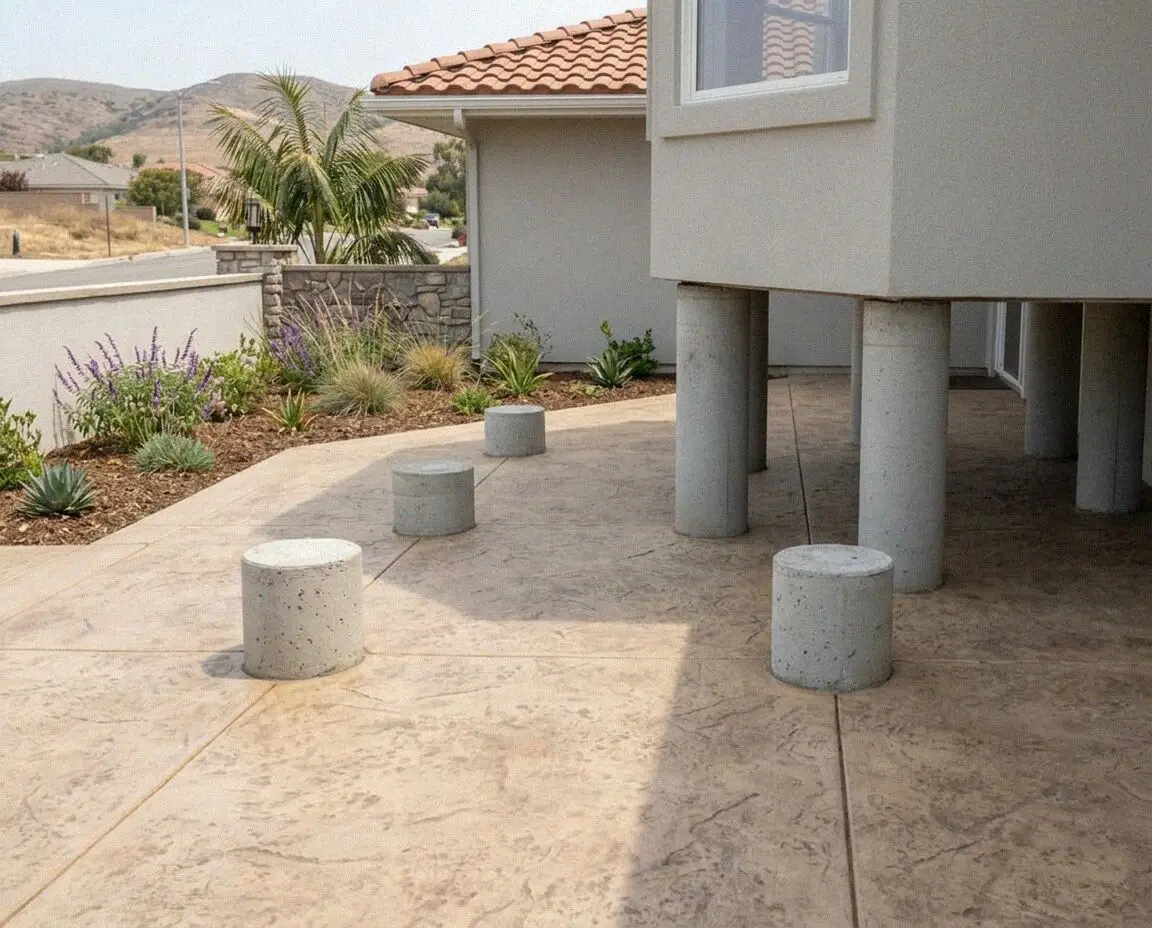
A settled house lifted level on galvanized steel piers driven through wet sand and fill until each one proves its load, then held there.
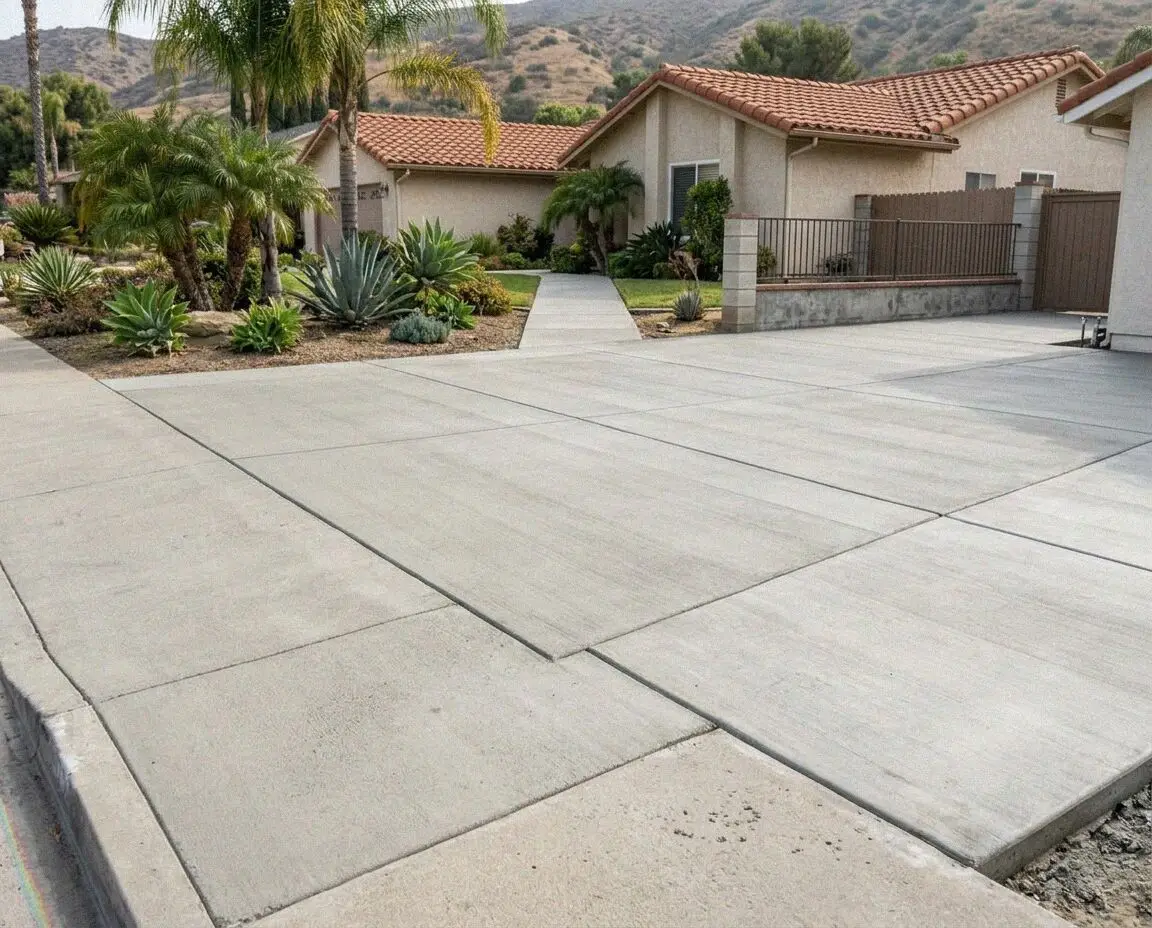
Slabs, decks and drives sawn wet on a scanned line, the slurry caught at the blade and the cut steel coated before the pour that closes it.
One crew carries the job from the first call to the walk-through. The person who measures your yard is the person who sets the forms, and the person who signs off is you.
Call the office or send the form. We reply within 1 business day and book the free on-site visit for a day inside the same week.
We measure the slab, probe the base, check the fall for drainage and write the estimate there and then, itemized line by line.
Once approved we file any permit, break out the old slab, compact the base, set the forms and the steel, then pour and finish.
We haul away the debris, walk the slab against the estimate with you, base to finish, and close the job only when you agree.
The license is held with the California Contractors State License Board in the C-8 class, checkable on its register. We carry liability insurance on every job, and it has followed the crew into Los Angeles County as far as La Mirada, so a job over the county line is covered too.
Scott Ferreira started the business in 2017 after 19 years on crews across coastal Orange County. The sand west of Beach Boulevard, the high water table around the Harbor and the salt that reaches the steel are conditions we build to, and the counter at City Hall is one we know.
Nothing is priced from a photo. We come out, measure the slab, probe the ground and check where the water goes, then write the estimate at the property with demolition, base, concrete, finish and clean-up as separate lines, so you see what each part costs before you agree.
Every job carries a written workmanship guarantee against defects in how it was built. It is claimed here most often on a settled slab, so it names the base, the thickness and the joints. Stains, wear and ground movement beyond what the joints control are not defects, and we say so.
Want to talk it through first? (657) 312-3698 or send us a message.
Reviews
Reviews left on Google, Facebook and the BBB by people whose slabs we poured in Huntington Beach and the towns around it. Each one names the job and the year it was done.
“Our pool deck was the original 1972 surface, lifting at the coping. They cut it out, compacted the sand, poured 640 square feet at 4 inches with an isolation joint at the pool, and sealed it at 28 days. Scott Ferreira measured it on a Thursday and we had the written estimate before he left.”
“The old driveway had sunk where the sand washed out under it and the cars scraped at the apron. They pulled the encroachment permit themselves, compacted the base in three lifts, poured 5 inches for my husband's truck and cut the joints that afternoon. Two winters on, not a crack.”
“We wanted a patio that looked like slate without the joints weeds get into. Scott Ferreira laid the pattern out with us on the visit, the crew poured 380 square feet, stamped it in ashlar and sealed it at 28 days. A full year of salt air later it still looks like the day it was finished.”
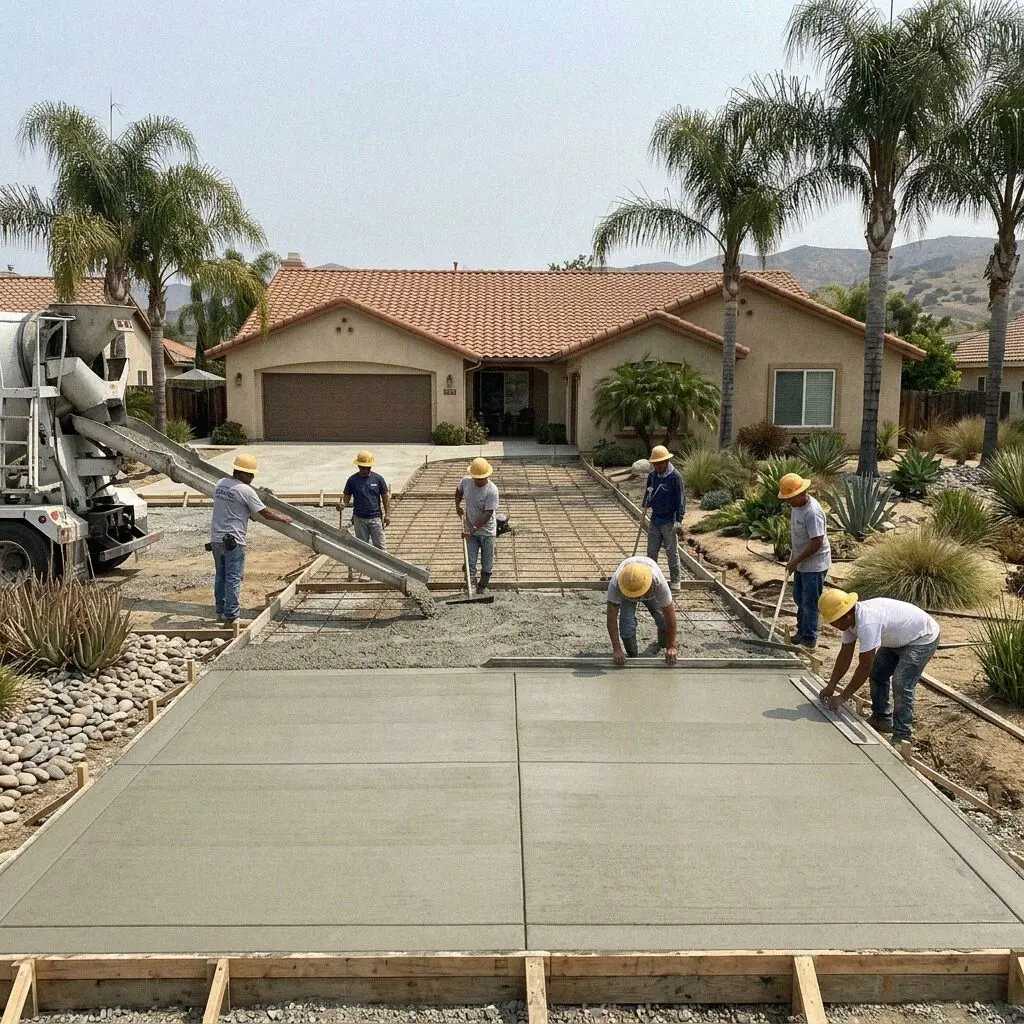
Who Goldenwest Huntington Beach Concrete Is
Goldenwest Huntington Beach Concrete is a concrete contractor in Huntington Beach, CA, run from Edinger Avenue. Scott Ferreira started it in 2017 after 19 years on crews across coastal Orange County, and it pours for homes and businesses in Orange and Los Angeles counties.
Pool decks, patios, driveways, slab foundations and stamped finishes, from the canal lots of Huntington Harbor to the tracts south of Adams Avenue, and every one of them carries a written workmanship guarantee against defects in how it was built.
The license is CSLB C-8, held with the California Contractors State License Board and checkable there by name. We carry liability insurance on every job, file any permit the work needs and meet the inspector. Every estimate is measured and written on site.
The Build Standard
The same sequence on every job, pool deck or garage slab. The ground is compacted before the base goes in, the steel is held up on chairs, the pour matches the load it will carry and the joints are cut before the crew leaves for the day.
A pool deck in the Harbor, a driveway in Seacliff, a stamped patio in Fountain Valley. All of them are a short drive from the office on Edinger, so ask and we will point you to one you can go and stand on.
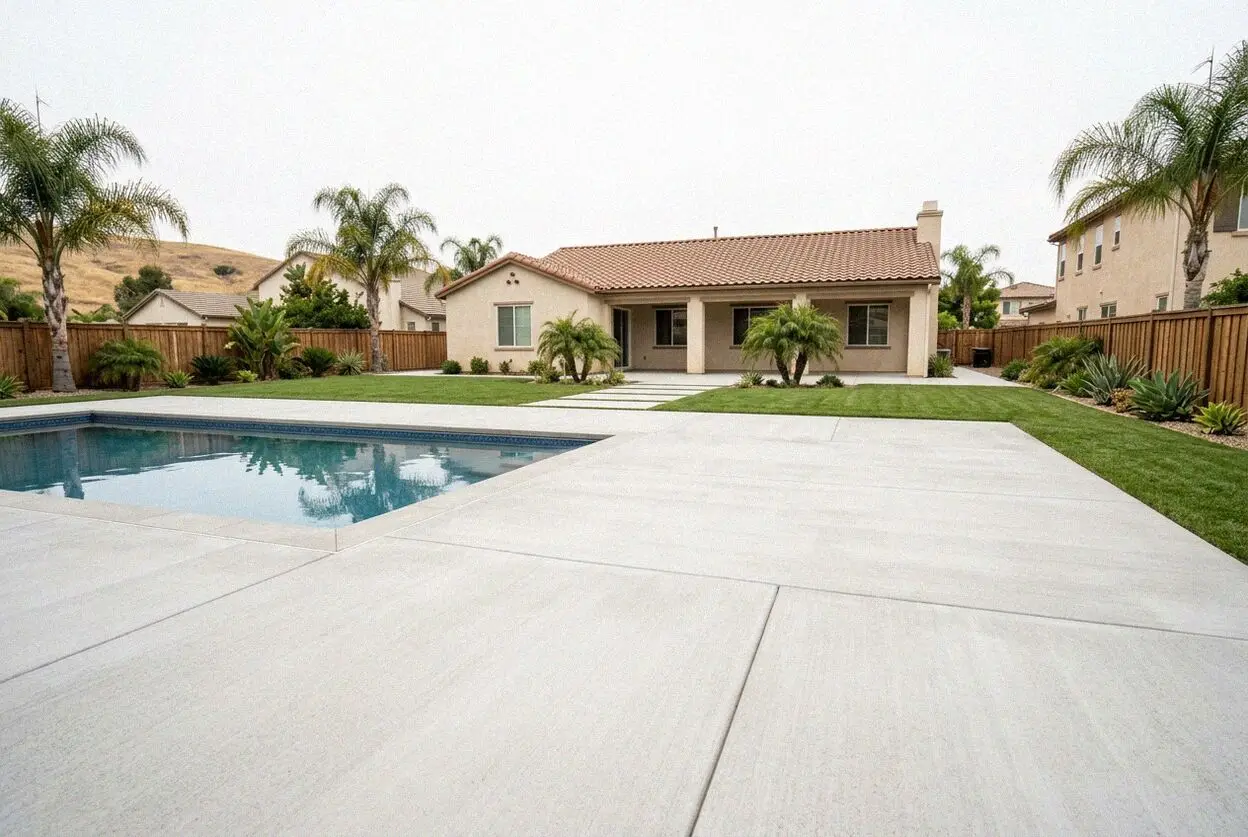
640 sq ft at 4 in · Isolation joint at the coping
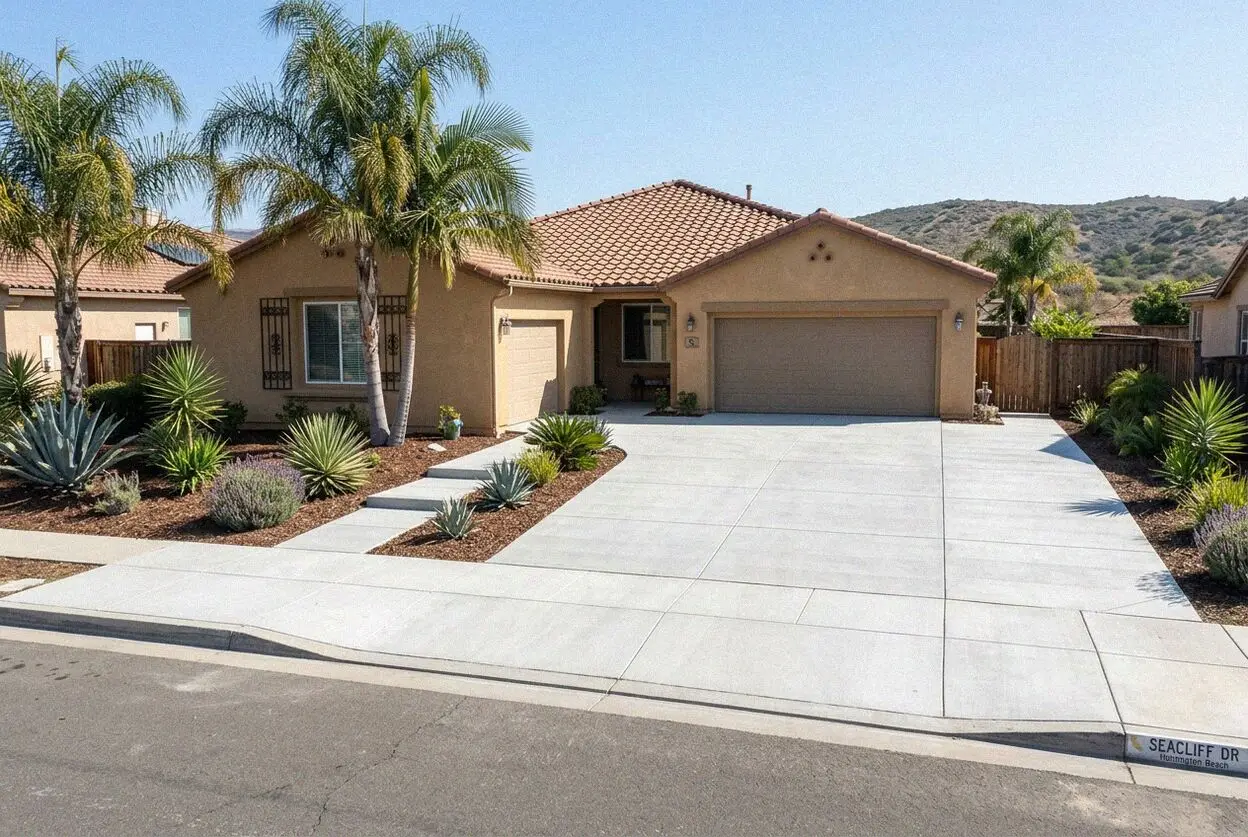
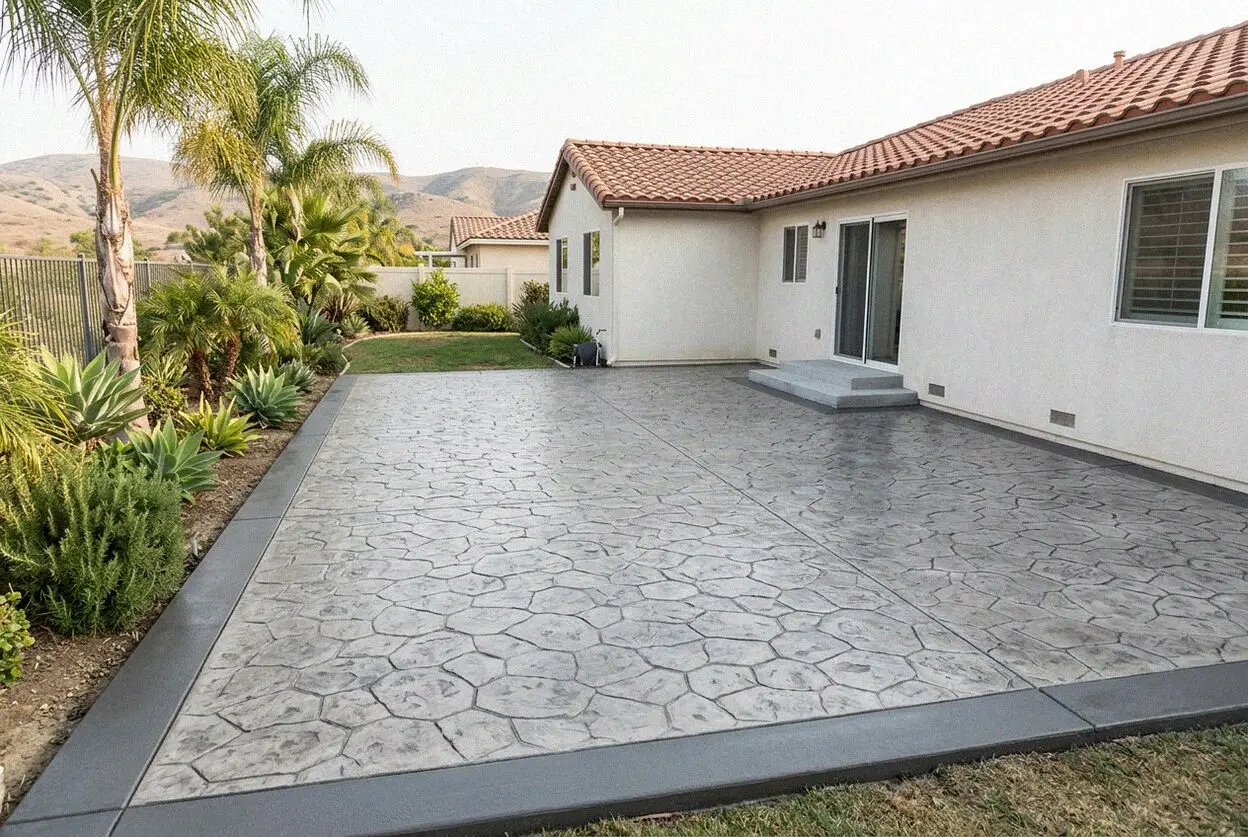
380 sq ft ashlar slate · Sealed at 28 days
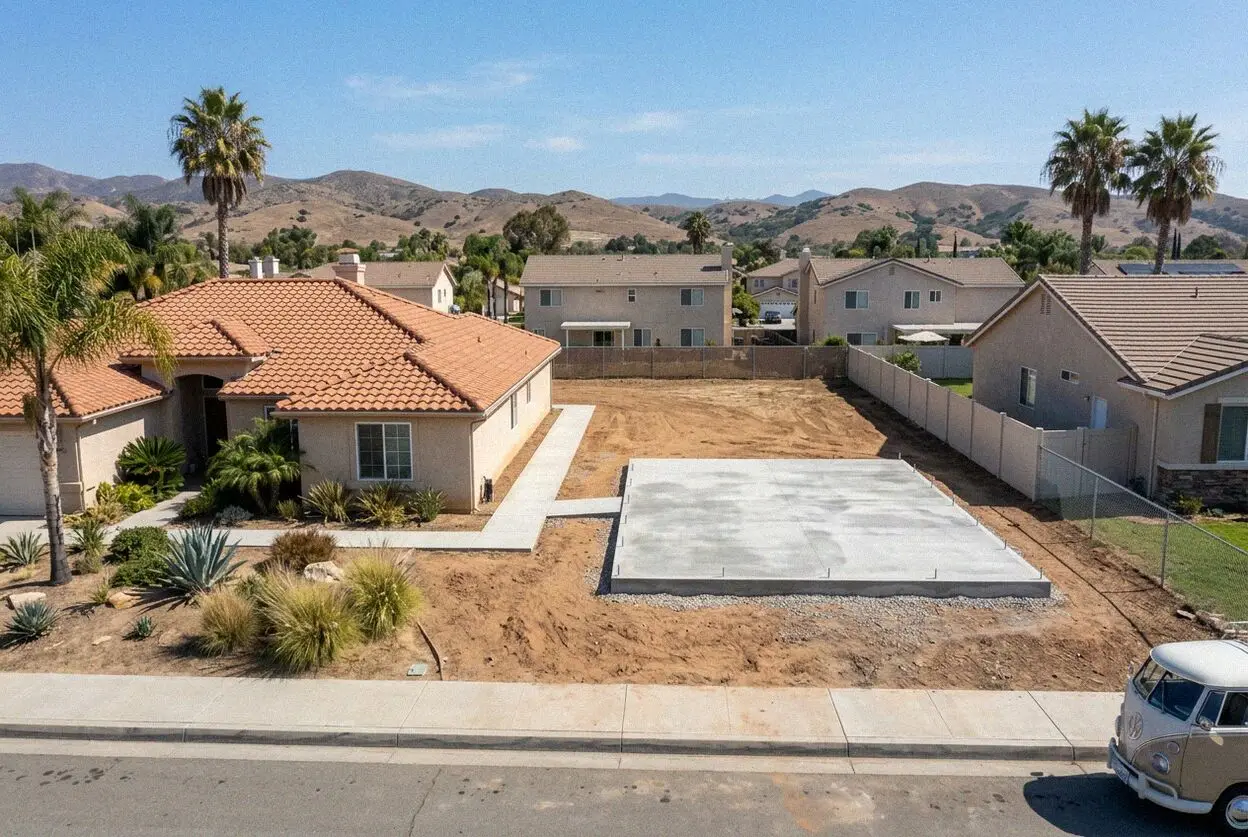
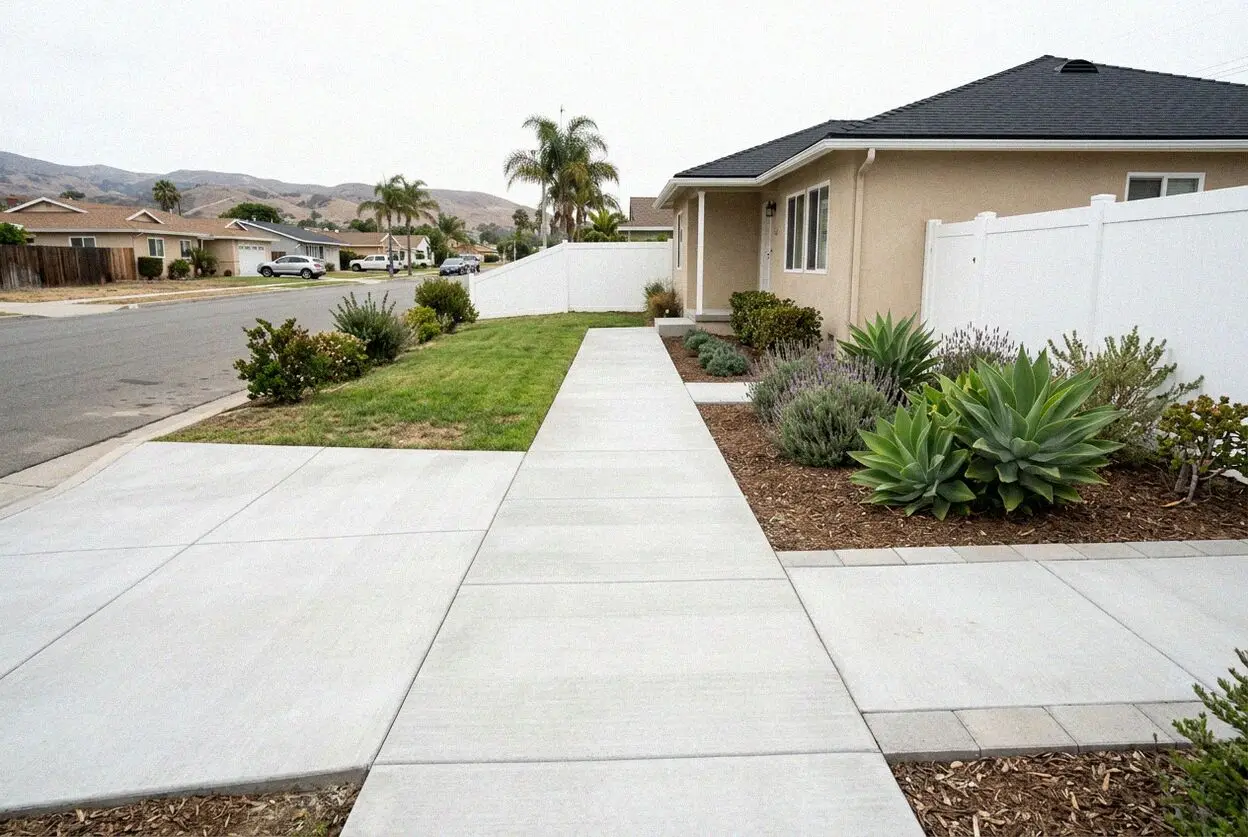
60 linear ft · Encroachment permit from the City
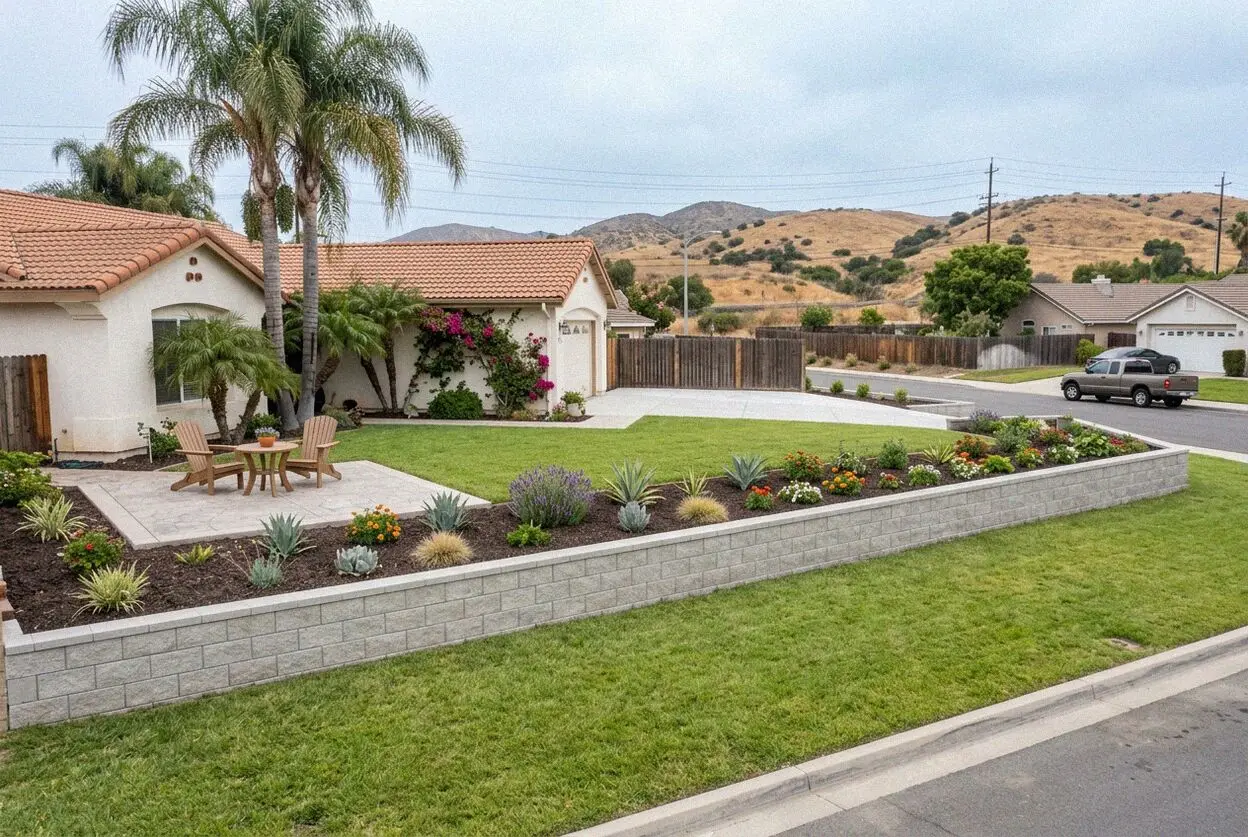
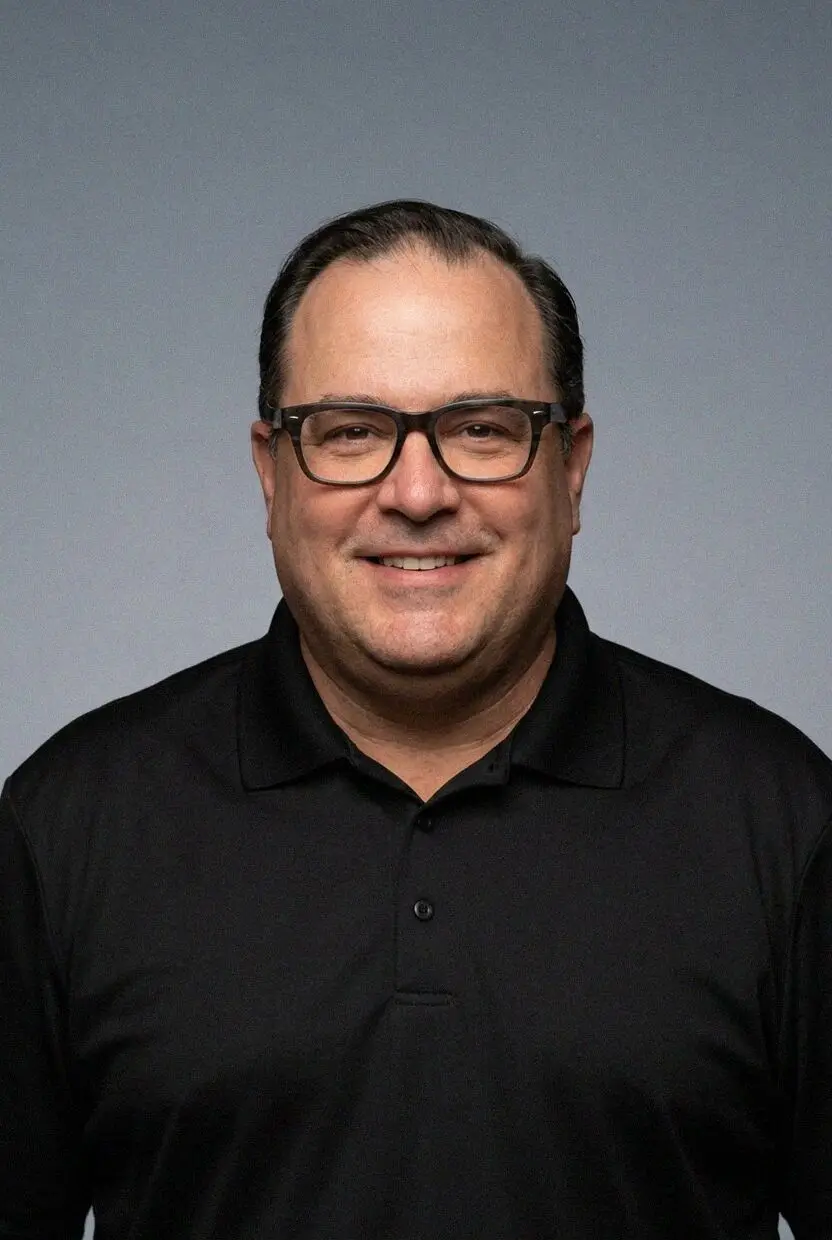
Scott Ferreira spent 19 years on concrete crews across coastal Orange County before starting Goldenwest Huntington Beach Concrete in 2017, most of that time on pool decks and patios in the beach cities. The C-8 license is in his name and he lives in Huntington Beach. He walks every estimate himself, and the one thing he does on every job is check the base compaction before a form is set, because that is where every slab he has been called to replace had failed.
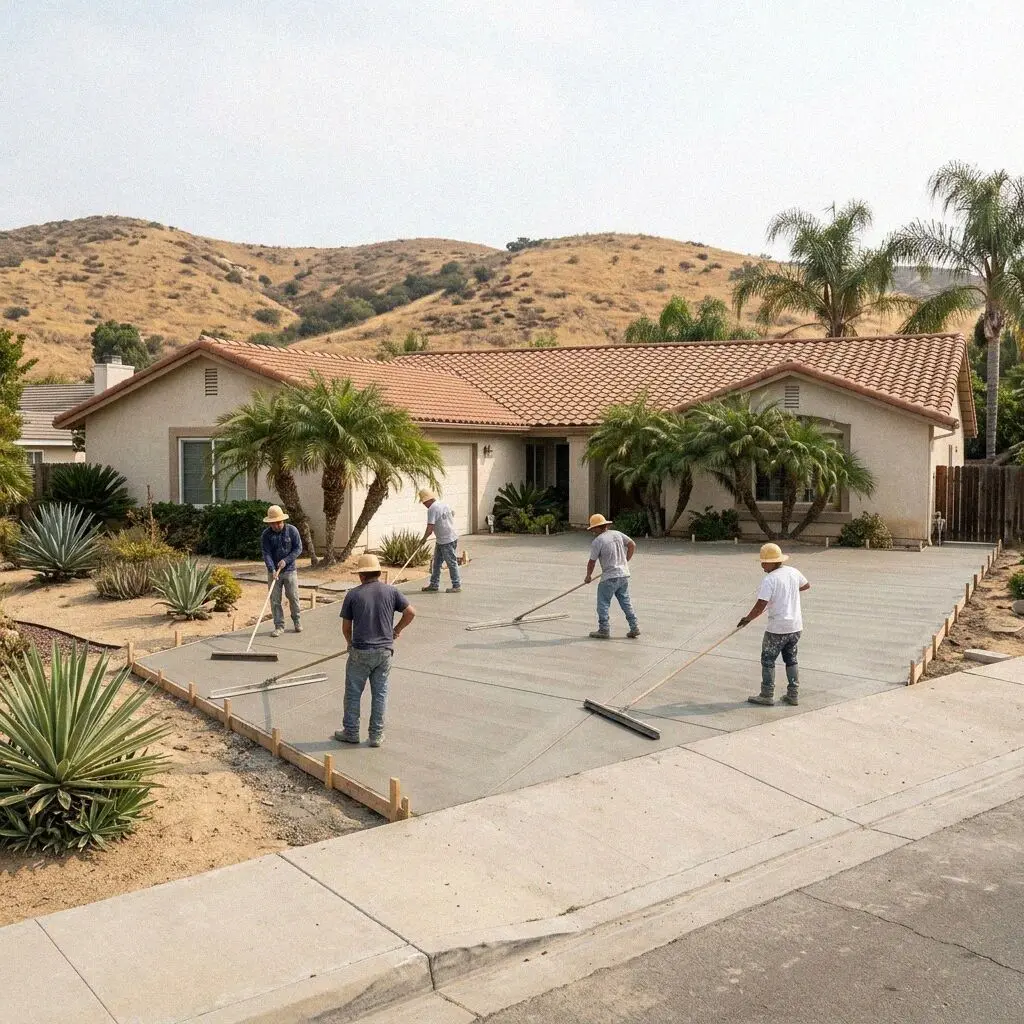
On the Ground Here
A city built out in one postwar generation on ground that runs from dune sand to marsh peat, in air that carries salt inland every afternoon. Each estimate we write starts with which of those the lot sits on.
Huntington Beach is a city of about 200,000 people between the Santa Ana River and the Bolsa Chica wetlands, and most of its housing went up in the 1960s and 1970s, when the bean fields and oil leases between Beach Boulevard and Goldenwest Street were cut into tracts. The original driveways and patios on those lots are now fifty or more years old, past the life of a well-poured slab, and many were poured thin on the sand with no base under them at all.
The ground is coastal. Dune sand under the older streets near Main Street drains fast but shifts until it is compacted, while the lowlands around Huntington Harbor, Sunset Beach and the Bolsa Chica lie close over the water table and are mapped by the California Geological Survey as liquefaction zones. The city grew over an oil field too, so a lot can carry a capped well that has to be located before anyone digs. We probe the ground and compact it in lifts before the base goes down.
Building permits come from the City's Community Development Department at City Hall on Main Street, and work at the curb, the driveway approach or the sidewalk needs an encroachment permit from Public Works. We file whichever the job needs and are on site for the inspection. The crew works the whole city, from the canal lots of the Harbor and the older streets downtown to the tracts off Adams, Brookhurst and Magnolia and the newer homes on the Seacliff side of Goldenwest.
Concrete is the option we fit most on the coast, and the reason is the ground. Poured concrete on a compacted base bridges the sand as one plate, pavers ride it and open at the joints, and asphalt needs a deeper base than sand gives it and goes soft in sun.
| Option | Lasts | Back in use | Upkeep | On sand and salt air |
|---|---|---|---|---|
| Poured concrete | 30 to 40 years | Feet at 48 hrs, cars at 7 days | Reseal every 2 to 3 years | One plate over the sand, sealed so the salt never reaches the steel |
| Interlocking pavers | 25 to 50 years on a firm base | Walk and drive the same day | Re-sand and weed the joints yearly | Follow the sand as it moves, and the joints fill with it |
| Asphalt paving | 15 to 20 years | Cars after 2 to 3 days | Sealcoat every 2 to 3 years | Needs a deeper base than sand gives, and softens in full sun |
Ranked by cost to lay, asphalt is least and pavers most, with concrete between. Ranked by cost to keep, the order flips, and concrete again sits in the middle.
Because salt reaches the steel. Chloride in the sea air soaks into unsealed concrete, and once it reaches the rebar the steel rusts, swells and breaks the surface off from inside. We hold the 3 inches of cover the American Concrete Institute sets over ground, and seal the slab.
Not until it is compacted. Sand drains well, a gift on the coast, but loose sand shifts under a load and a slab poured straight onto it settles and cracks. We compact the subgrade in lifts with a plate compactor, then lay and compact a gravel base, before a driveway is formed.
Because water close under a slab softens the base and lifts it. The lowlands around the Harbor and the Bolsa Chica sit just above the water table, mapped by the California Geological Survey as a liquefaction zone. We dig to firm ground, lay a draining gravel base, and pour 4 inches.
They decide where the slab cracks. Concrete shrinks as it cures and cracks somewhere, so we cut a groove a quarter of the depth at 2 to 3 feet for every inch of thickness, and the crack follows the groove. A pool deck also gets an isolation joint at the coping.
Flatwork inside your lot line needs none, as the California Residential Code exempts driveways, patios and walks. The approach and the sidewalk are right-of-way and need an encroachment permit from Public Works, and a retaining wall over 4 feet needs a building permit from the City.
4 inches under people and cars, 5 under a pickup, and 6 where a motorhome or a boat and trailer park, a common ask on the Harbor side of town. An inch short is the usual cause of a slab that cracks in its first few years, and the thickness we pour is written on your estimate.
The questions we are asked on most visits in Huntington Beach, answered as we answer them at the curb: cost, ground, salt air, thickness, joints, sealing, timing, permits and the guarantee.
What comes out sets the estimate before what goes in. A driveway poured thin on the sand in 1968 breaks up fast, but one with a base under it takes a day longer to remove, and then thickness and finish move the number more than area does. We measure all of it on a free visit and write the estimate at the property, because a flat lot behind Adams and a canal lot with a high water table are not the same job.
Yes. Through a 36-inch gate we run barrows, and past a narrower one, or around a pool, a line pump reaches the back from a truck at the street. Access is the second thing after size that moves an estimate, because a slab carried in by barrow is labor before it is material. We check the gate, the route and the ground on the visit, and each is its own line on the estimate.
4 inches under cars, 5 under a pickup and 6 where a motorhome or a boat and trailer park, which on the Harbor side of town is a common ask. The thickness is the cheapest part of the job to get right and the one part that cannot be fixed afterward, so what we pour is written on the estimate and checked at the walk-through.
Because chloride from the sea air reaches the steel through the concrete, and rusting steel swells and breaks the surface off from inside. We hold 3 inches of concrete between the ground and the steel, keep the mix dense and seal the finished surface, so the salt stops at the top rather than reaching the bar. It is why a slab a mile from the pier is built a little differently from one in La Habra.
Control joints are grooves sawn into the slab, a quarter of its depth, so the crack every slab makes as it shrinks lands in a straight line you cannot see instead of wandering across the surface. They go in at 2 to 3 feet for every inch of thickness. Cut the day of the pour they work. Cut the next day, the slab has often chosen its own line already.
Loose sand does, compacted sand does not. Sand is a good subgrade once it is compacted in lifts, because it drains and does not swell, but a slab poured on undisturbed dune sand or on the loose fill of a 1960s tract settles wherever the sand washes out under it. We compact the subgrade with a plate compactor, then build and compact a gravel base on top, before any form is set.
Any month, which is one advantage of a marine climate. Huntington Beach rarely passes 90 degrees and the marine layer keeps mornings damp, so the surface does not dry out ahead of the cure as it does inland. The one thing we work around is rain, since a pour needs a dry day and a dry night after it, so a wet January week is the only time we move a date.
Yes, more than anywhere inland. A penetrating sealer closes the surface against salt, water and oil, which is what keeps the chloride from reaching the steel and what stops a driveway staining at the first drip. We seal 28 days after the pour, once the slab has cured, and a reseal every 2 to 3 years keeps it working. Stamped and colored work is sealed on the same schedule.
Two to four working days on site for most jobs, then curing. The tear-out and the base take the first day or two, the pour and the finish are one morning, and the joints are sawn that afternoon. Walk on it after 24 to 48 hours, park a car after 7 days and keep anything heavier off for 28, when the concrete reaches its full strength.
Not inside your lot line for flatwork, which the California Residential Code exempts. The driveway approach, the curb cut and the public sidewalk are in the right-of-way and need an encroachment permit from Public Works, and a retaining wall over 4 feet or a slab under a structure needs a building permit from the City's Community Development Department. We file whichever applies and meet the inspector.
Defects in how the slab was built, which the guarantee names as the base, the thickness, the steel and the joints, with the terms written on the estimate you sign. It does not cover staining, surface wear, salt damage on a slab left unsealed after we recommended it, or a hairline crack that has landed in a joint, because that is the joint doing its job. Where the fault is ours we come back and put it right.
You call or send the form and hear back within 1 business day. The visit is booked inside the week, the estimate is measured and written on the spot, and once you approve it any permit goes in, with the City's review time built into the start date. The crew is on site two to four working days, the walk-through happens the day the joints are cut, and cars go back on after 7 days.
Where We Work
From the office on Edinger the crew works the beach cities and the tracts inland of them, and we know each one by its ground, its housing and its permit counter. Look for your town below, or call and ask. We will tell you straight away whether we come to you.
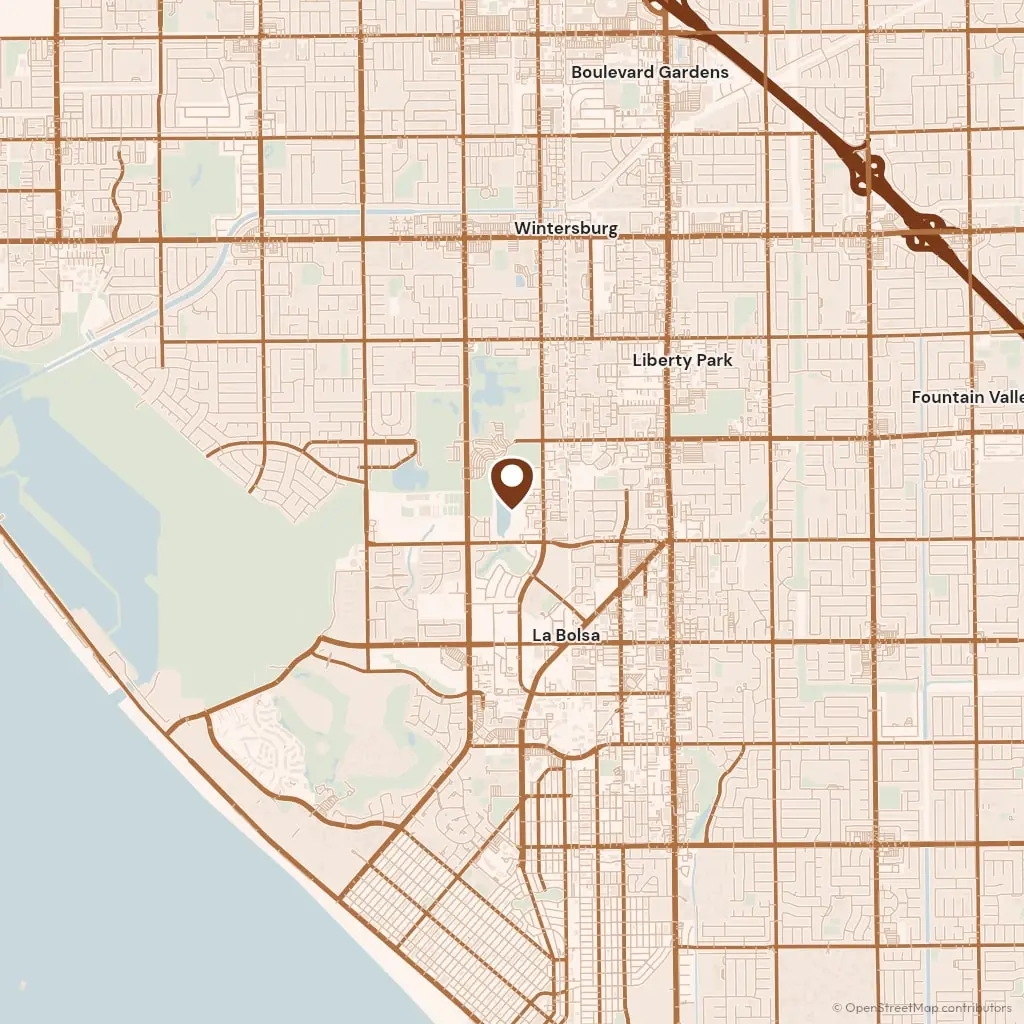 Open the Huntington Beach Office in Google Maps
 Send the form or call, and you hear back within 1 business day. Scott Ferreira comes out, measures the work and writes the estimate at your property, line by line, with nothing to sign on the day and no charge for the visit.