Serving Huntington Beach, CA and surrounding areas.(657) 312-3698
Goldenwest Huntington Beach Concrete

Concrete Parking Lot Building in Huntington Beach, CA, With No Mesh for the Salt to Rust

Goldenwest Huntington Beach Concrete pours lots for shops, courts and yards on the coast as plain jointed slabs, 5 to 7 inches, with no mesh inside. Every estimate is measured and written on site.

Google reviewsFacebook reviewsBetter Business Bureau reviews5.0 Stars Rated by our customers · Google, Facebook and the BBB
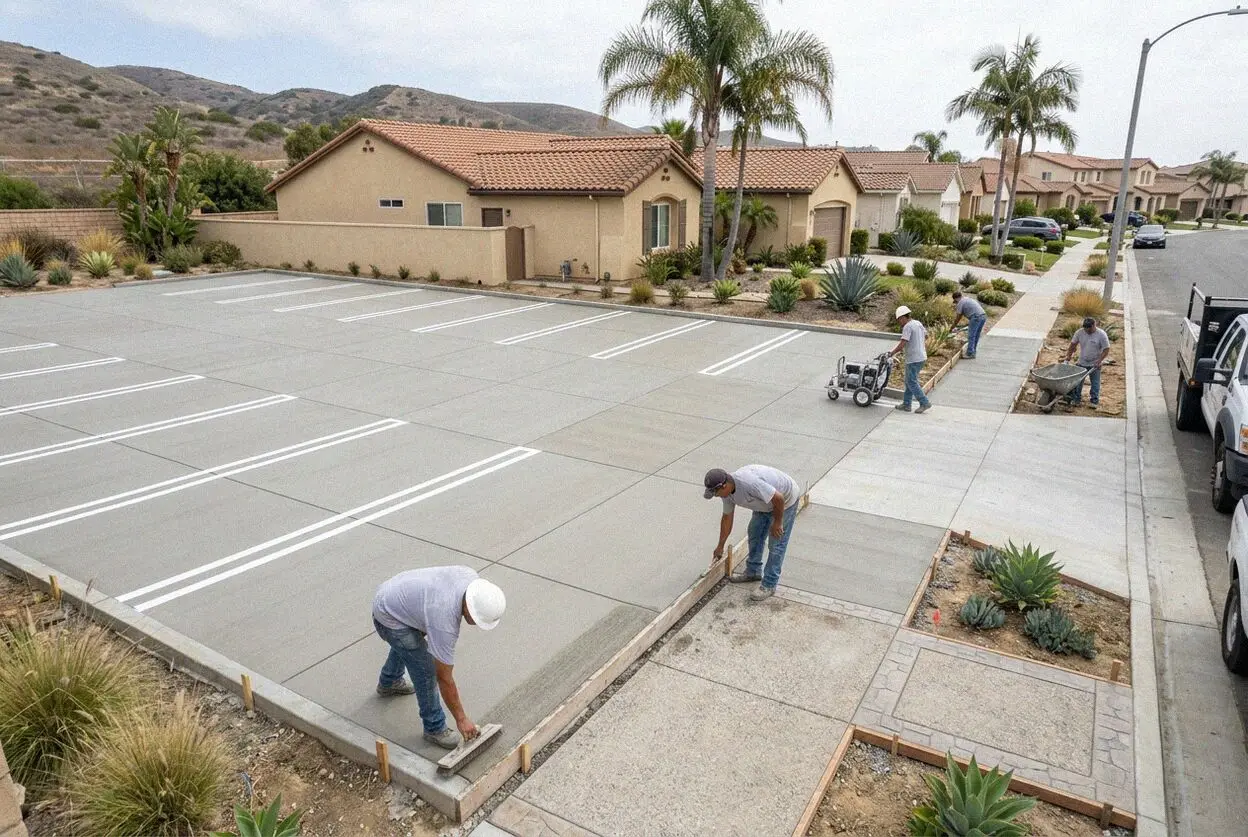
Crew screeding a fresh concrete parking lot beside a Huntington Beach shop
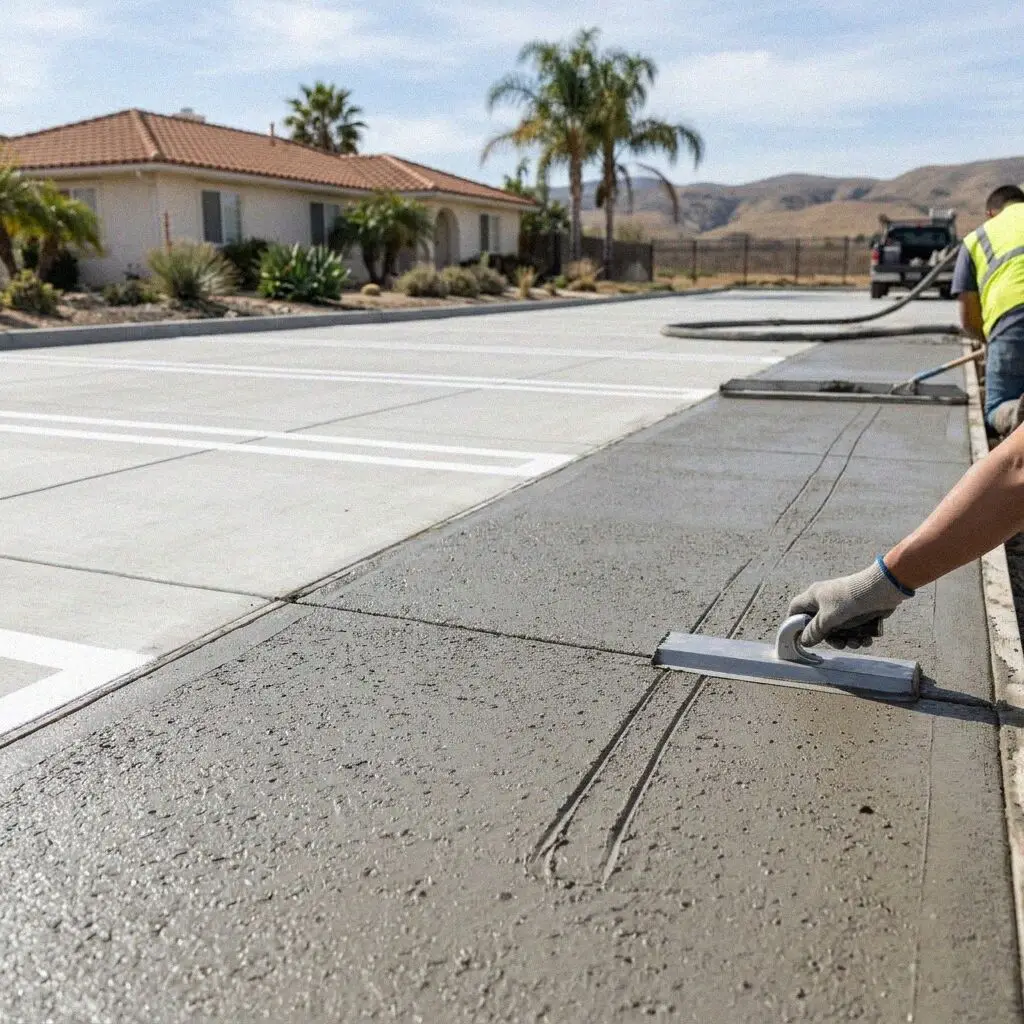
Hands sawing a joint in a new parking lot slab in Huntington Beach

How a lot is built here

Pouring a Parking Lot a Mile From the Pier

A parking lot near the ocean fails from the inside before it fails from the wheels. Salt carried inland on the afternoon wind settles on the slab, rain takes it down through the surface, and once it reaches a mat of mesh the steel rusts, swells and lifts the concrete off in plates. A lot that carries no mesh at all has nothing for the salt to find, so it is built as one plain slab cut into square panels small enough that the joints do the work the steel would have done.

Goldenwest Huntington Beach Concrete has poured lots in Huntington Beach since 2017, under Scott Ferreira, who spent 19 years on flatwork crews across coastal Orange County before starting it. The lots here are the strip centers along Beach Boulevard, the apartment courts inland of Warner Avenue, the yards on Gothard Street and the boat storage beside the Harbor, most of them asphalt laid in the 1960s over the same sand the tract houses stand on.

Lots are built under a CSLB C-8 license, with liability insurance on every job, to the California Building Code and its accessible parking chapter, so the stalls nearest the door sit at a slope a wheelchair holds still on. The plans go through the City's Community Development Department, the approach through Public Works, and the inspector sees the base before the pour. Every lot leaves with a written workmanship guarantee against defects in how it was built.


Patch or rebuild

When is a Huntington Beach parking lot past patching?

Water standing at midday

A lot on the flats has nowhere to send its water unless the fall was built in, and a puddle still there once the marine layer has burned off is the fall gone. Water that sits soaks through every crack under it, and the base beneath that spot goes softer with each wet week of winter.

The same pothole every winter

Asphalt patched in the same spot for the third year is telling you the trouble is under it, not in it. Sand that was never compacted when the lot was laid washes out under the patch, the patch drops, and the hole opens again at the first rain. Filling it again buys one more summer.

Rust bleeding from a crack

A brown stain running out of a crack in a concrete lot is the mesh rusting under it. Salt off the ocean has reached the steel, the steel has started to swell, and the crack it bleeds through is the one it opened. Nothing sealed over the top reaches the wire, which keeps growing.

Concrete lifting off in plates

Where rusted steel has swollen enough, the slab over it shears off in a sheet an inch thick with the wire showing beneath. That is a trip hazard on a lot the public walks and a claim the day a customer falls on it. Once the surface comes off in plates the lot is being rebuilt.

In every lot

What Goes Into a Huntington Beach Parking Lot

Eight things go into every lot at no separate line, and each answers something the coast does to a slab. Salt looks for steel, sand shifts until it is packed, water sits close underneath, and fog keeps the surface wet past nine most mornings.

Asphalt milled and hauled

The old lot is milled off and trucked to the recycler, and any concrete apron under it is broken out, so the new slab starts on ground.

A hole dug to the water

One test hole at the low corner goes down until it finds water or 3 feet, because how close the water sits decides how the base is drained.

Base that drains sideways

Crushed rock compacted in two lifts, laid with a fall of its own toward the basin, so water under the slab has a way out other than into the sand.

A dense mix, no mesh

4,000 psi concrete batched with the water held low, so salt has to travel further to get in, and no mat of mesh inside for it to arrive at.

Panels cut 12 feet square

Joints sawn the day of the pour into panels no more than 12 feet across, the spacing that keeps a plain slab from cracking where it chooses.

Coated dowels, day joints

Where one day's pour meets the next, epoxy-coated dowels carry the wheel across. It is the only steel in the lot, and it is wrapped against salt.

Basin and stalls to grade

The catch basin sits at the true low point and the accessible stalls are shot flat to 2 percent, checked with a level before the concrete comes.

Striped and guaranteed

Stalls, arrows and the blue bays are painted at 28 days, and the written guarantee is handed over on the walk-through with the joint plan.

Ways to build it

Huntington Beach Parking Lot Builds, Compared

Four ways to build a lot a mile from the water, set against what drives on it and how much steel each puts within reach of the salt. The base and the drainage under all four are the same, so the table is about the slab.

OptionBuilt forSteel to rustPanel sizeLife by the sea
5-inch plain jointed slabCars at a shop or an apartment courtNone inside the panels12 feet square, sawn same day30 years, resealed every 3
6-inch slab with fiberDelivery vans and a weekly trash truckCoated dowels at day joints only12 feet square, sawn same day30 to 40 years
7-inch lane on rebarTrucks and boat trailers on a set pathEpoxy-coated number 4 bars15 feet along the lane35 years or more
Asphalt overlayA lot being sold inside five yearsNone, and no concrete eitherNo joints, cracks where it likes8 to 12 years, sealed every 3

Ranked by cost to build, the asphalt overlay is least and the 7-inch truck lane most, with the two plain slabs between; over 30 years the order runs the other way.

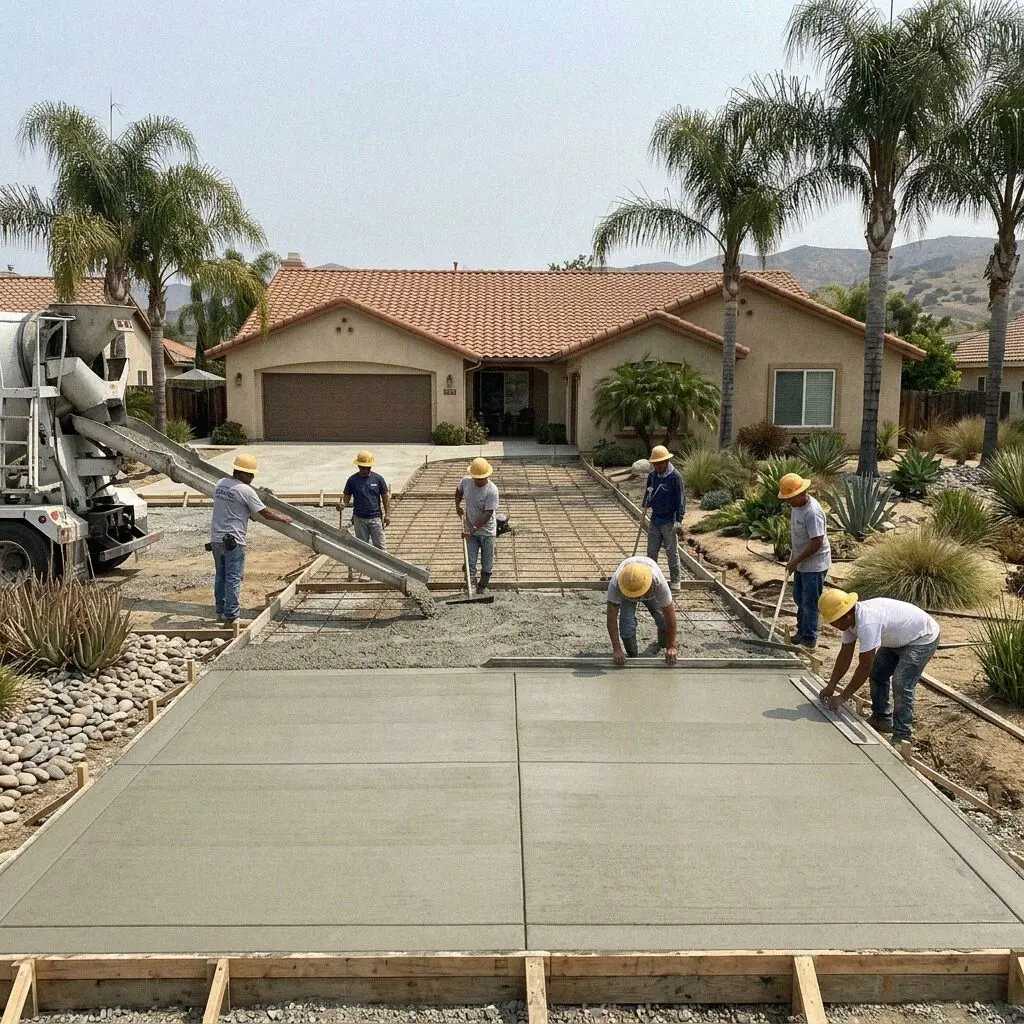
Concrete crew at work on a commercial parking lot in Huntington Beach

Salt, sand and fog

Why a Parking Lot Is Built Differently by the Beach

Two conditions set a lot here and both come off the ocean. The wind carries salt onto every slab within 2 miles of the pier, and the water table sits within a few feet of the surface on the flats.

Salt is the reason for the plain slab. Chloride lands on a lot every afternoon the onshore wind blows, and fog wets it most mornings from May through August, so the surface is rarely dry long enough for the salt to stay on top. Inside a slab it does nothing until it reaches steel, and in a mesh-reinforced lot laid the inland way that is a mat of wire across the whole area. Leave the mesh out and cut the panels tight, and the one steel in the lot is a coated dowel at a day joint.

The water table is the reason for the base. Between Bolsa Chica and the Santa Ana River the city is a lowland that was marsh and bean field before it was tract, and a hole at the low corner of a lot near the Harbor finds water before it finds 4 feet. A base cannot drain down into that, so it is laid with a fall of its own to the basin under the slab's own fall, and grades are shot on the rock as well as the forms. The footings under the light standards are pumped dry first.

From call to stripes

How We Build a Huntington Beach Parking Lot

Five stages, with the person who measures the lot standing on it at the pour. The plans go to the City before the milling machine is booked, and the tenants know which week their cars move.

1

Measure, count and dig one hole

Scott Ferreira measures the lot, counts the stalls, notes what turns where, and digs the hole at the low corner. The figure is written there.

2

Choose the slab, file the plans

You pick the section against what parks, set the week, and the drawings go to Community Development. The approach permit goes to Public Works.

3

Mill the asphalt, prove the sand

The old lot is milled and hauled, soft spots are dug out and refilled, and the sand is plate-compacted until it stops moving under the plate.

4

Base to grade, forms, pour

Rock compacted with its fall to the basin, forms set, the truck called once the fog lifts, and the surface finished after the bleed water goes.

5

Cut, cure, stripe, hand over

Panels sawn that afternoon, the lot kept damp for a week, sealed and striped at 28 days, and the guarantee handed to you on the walk-through.

Behind the number

What Sets the Estimate on a Huntington Beach Parking Lot

What drives on the lot sets the slab, and what the test hole finds sets the base, so two lots of the same stall count can be a day apart in work. Nothing is figured from an aerial photograph. Every estimate is measured and written on site.

A shop lot off Beach Boulevard

Cars only, so the slab is 5 inches plain. The number moves on the approach across the sidewalk, which Public Works permits and inspects itself.

An apartment court inland

Tenants keep their cars, so the lot is poured in two halves a week apart, and the second pour is the reason the forming is counted twice.

A yard on Gothard or Bolsa

Forklifts, trucks and trailers set a 7-inch lane on coated bar along their path, measured as its own area, with the rest of the yard at 6.

Coated steel and a sealer

Epoxy-coated dowels, a penetrating sealer at 28 days and the blue accessible stalls painted to the code chapter are each a line you can see.

The visit and the written figure cost nothing, and the call that books it comes within 1 business day. Bring the stall count and a note of what turns on the lot. (657) 312-3698 or send us a message.

Ready to have your Huntington Beach lot measured?

Send the form or call, and someone rings back within 1 business day to fix a time. Scott Ferreira measures the lot, counts the stalls, digs the hole at the low corner and writes the figure at your property.

Request a Free Estimate

Written on site · No obligation

By submitting, you agree to our disclosure and consent terms, including being contacted by Goldenwest Huntington Beach Concrete.

Lots we rebuilt

Three Huntington Beach Lots, in Their Owners' Words

Three reviews from Google, Facebook and the BBB, each about a parking lot rather than a driveway or a slab, and each naming what was under the old surface.

Google review

“Our center on Beach Boulevard had been patched every winter for as long as I have owned it. They milled the asphalt, found water 3 feet down at the low corner, laid a base that drains to the basin and poured 5 inches with no mesh. Two winters on there is nothing standing on it by ten.”

Marisol T. of SeacliffStrip center lot rebuilt · Google · 2024
Facebook review

“Twelve units, one lot, and no way to send tenants elsewhere. Scott poured it in two halves a week apart and the cars moved across once. The old concrete had been lifting in plates where the wire had rusted, and the new slab has no wire in it at all, just joints every 12 feet.”

Dev R. of Huntington BeachApartment court lot · Facebook · 2025
BBB review

“We store boats on trailers beside the Harbor and the yard had sunk where the trailers back in. They cut a 7-inch lane on coated bar along that path and poured the rest at 6. The base was pumped dry the morning of the pour, and a year of trailers has not marked it.”

Glenn A. of the HarborBoat storage yard · BBB · 2023

Before you book

Parking Lot Questions Asked in Huntington Beach

What moves the figure, how long the tenants lose their stalls, which office permits which part, and what the guarantee names once the stripes are down, answered for a lot on the coast.

(657) 312-3698
  • What makes one parking lot estimate larger than another?

    The heaviest thing that drives on it, and how close the water sits underneath. A lot for cars is 5 inches plain, and a trash truck or a trailer on a set path adds a thicker lane on coated bar, measured as its own area. The test hole at the low corner sets the base, because water within 3 feet means rock laid to drain sideways to a basin and a deeper dig at the wet end. Stall count only sets the area.

  • How long does a parking lot rebuild take on site?

    One to two weeks for a lot of 20 to 40 stalls, poured in halves. Milling and base take two or three days a half, the pour is a morning, and the joints are sawn that afternoon. Cars go on a half at 7 days, which is when the second half is milled, and the stripes go on at 28. In May and June the truck is called for late morning, once the marine layer has lifted, since a slab finished under fog scales.

  • Does the estimate include milling and hauling the old lot?

    Yes. Milling the asphalt, trucking it to the recycler, breaking out any old apron under it and digging out the soft spots it hid are written into the figure, and so are the basin, the base, the sawing and the striping. What sits outside the figure is named at the visit rather than added later, an approach permit fee, a broken storm line under the old lot, or a light standard that has to move.

  • Which permits does a parking lot need in Huntington Beach?

    Two, from two counters. The lot itself, its drainage and its accessible stalls go through plan check at the City's Community Development Department, since a commercial lot is a permitted improvement in a way a home driveway is not. The approach across the sidewalk and any curb cut take an encroachment permit from Public Works. We draw and file both, and the City's review time is built into the start date.

  • Will insurance pay for a parking lot that has broken up?

    Not for wear, and salt damage is wear. A commercial policy treats rusted mesh, settlement and a surface breaking up over 30 years as maintenance rather than a sudden loss, so a lot that has failed by age is the owner's to rebuild. A covered event is different, a vehicle striking a wall, a water main washing out the base or a storm line collapsing under the slab. Photograph the lot before it is milled.

  • What does the guarantee cover on a new parking lot?

    How it was built, which the estimate names as the compaction, the base and its fall, the thickness poured, the panel spacing and the finish, and it is a written workmanship guarantee against defects in how it was built. Tire marks, oil, stains and a crack that lands in a joint sit outside it, since a crack in a joint is the joint working. Where the fault is ours we come back and put it right.

  • What concrete goes into a lot this close to the ocean?

    A 4,000 psi ready-mix batched with the water held low, so it sets dense and salt takes years to work in rather than months. Crushed rock under it, compacted, and no mesh in the panels at all. The only steel is the epoxy-coated dowel across each day joint, and where a truck lane calls for bar it is coated number 4 on chairs. The mix and the steel are named on the estimate you sign.

  • Does the business have to close while the lot is poured?

    No. The lot is milled and poured in two halves, so half the stalls stay in use through the job and a customer or a tenant is never sent off the site. What the crew needs is the half they are on kept clear, water, and a decision on which half goes first, usually the one furthest from the door. A yard with one gate is poured so the gate side is done last.

Towns we pour in

Concrete Parking Lots Around Huntington Beach

The nearest towns on the list, with the straight-line distance from the office on Edinger Avenue beside each. Every lot is measured at the property before a figure is written.

Show All Areas We Serve

Book a free measure of your Huntington Beach lot

Call or send the form and you hear back within 1 business day. Say how many stalls the lot has and what the heaviest thing driving on it is, and the visit can be booked for a day inside the same week, cars left where they are.