Serving Huntington Beach, CA and surrounding areas.(657) 312-3698
Goldenwest Huntington Beach Concrete

Garage Floor Concrete in Huntington Beach, CA, Built for What the Car Brings Home

Goldenwest Huntington Beach Concrete pours bay floors dense, over a sheet, falling to the door and sealed, so salt water drains instead of soaking in. Every estimate is measured and written on site.

Google reviewsFacebook reviewsBetter Business Bureau reviews5.0 Stars Rated by our customers · Google, Facebook and the BBB
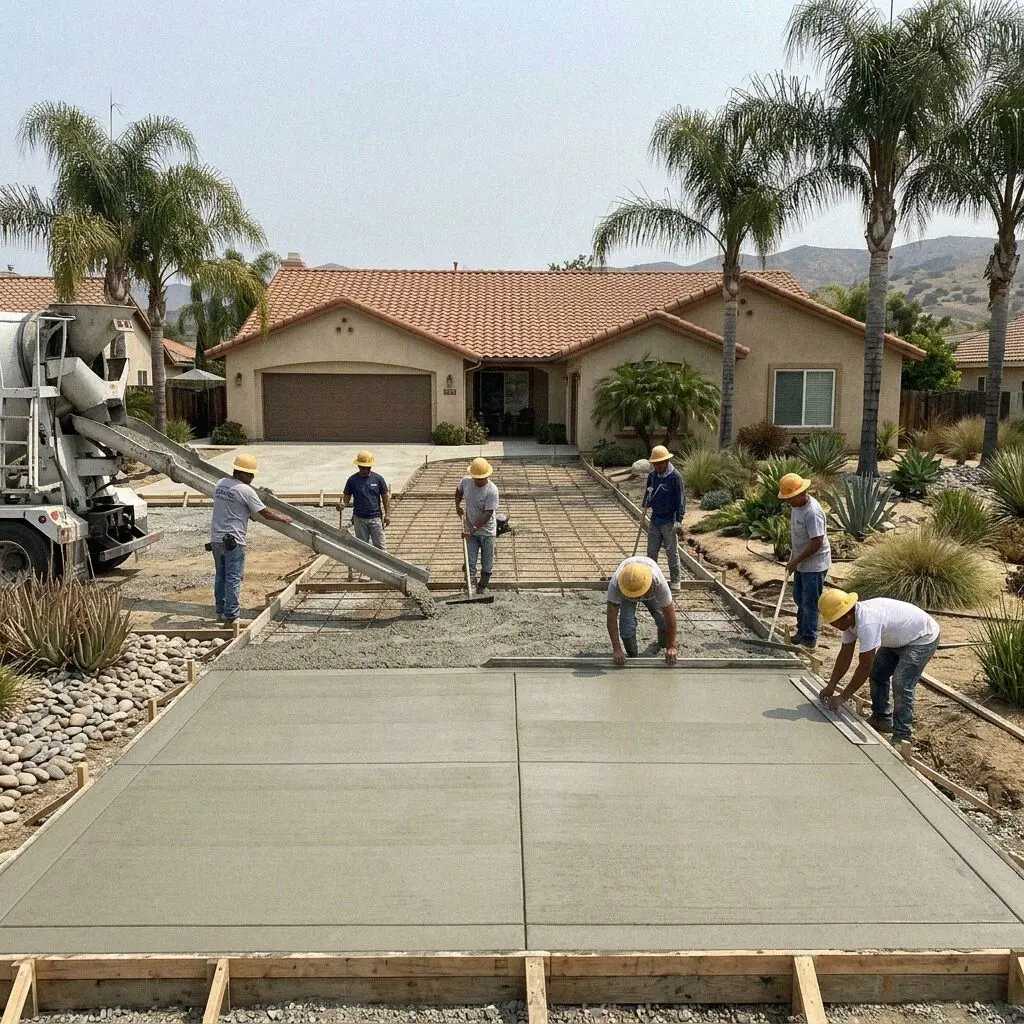
Crew screeding a new garage floor slab inside a Huntington Beach tract garage
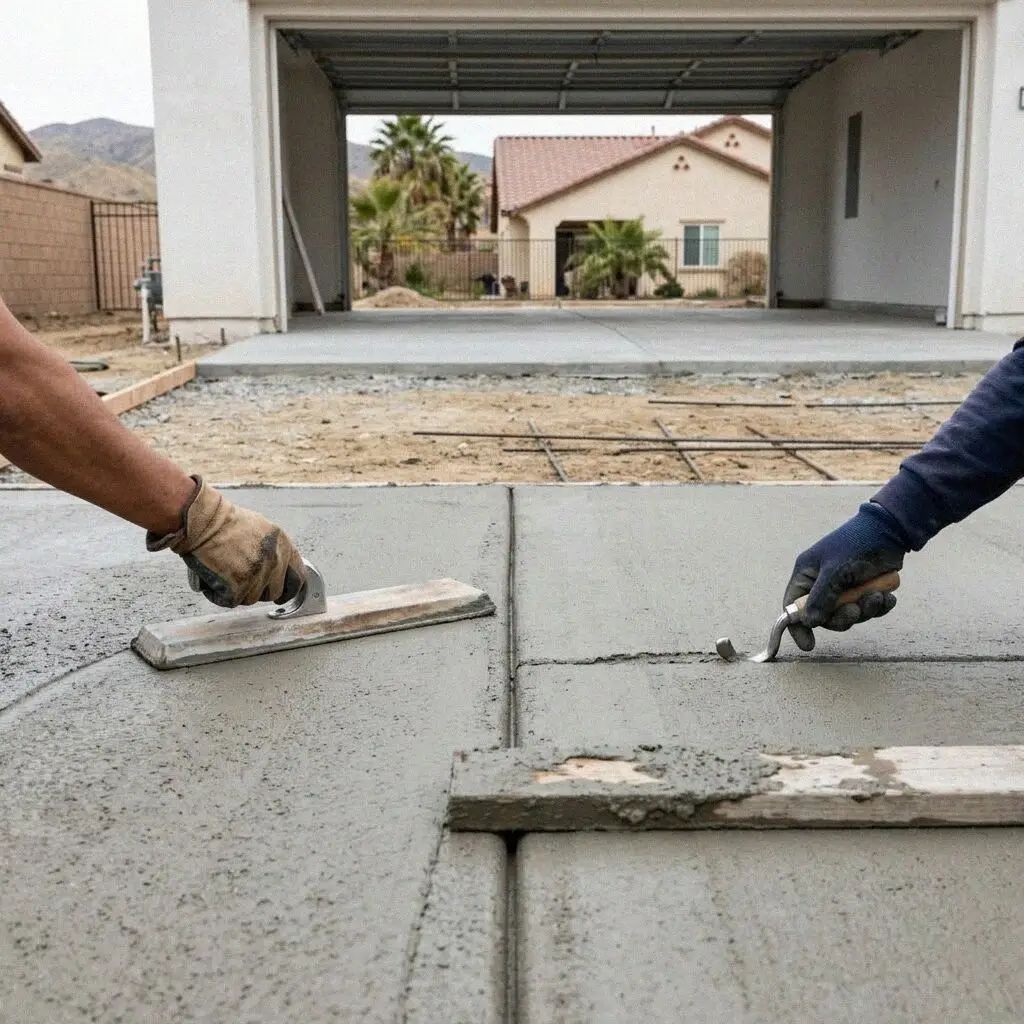
Steel trowel finishing a fresh garage floor at a Huntington Beach home

How a bay floor is built here

Replacing a Garage Floor in Huntington Beach

A garage floor a mile from the surf is wet more often than a patio is. The car comes back from the beach dripping salt water, the wetsuits and the boards drain on it, and on a marine layer morning the cold slab sweats a film of its own. On an old floor that water soaks straight in, the salt stays behind in the pores, and after enough summers the surface scales off in flakes. A floor built for it is dense enough that the water sits on top, and falls so that it leaves.

Goldenwest Huntington Beach Concrete pours those floors from Edinger Avenue, and Scott Ferreira sets the screed on every one. The bays he takes out are the originals from the 1960s and 1970s tracts, poured at three and a half inches on the dune sand with no sheet under them and usually no fall, so a bay that has held wet cars for fifty years is holding the salt of every one. The floor that goes back is thicker, denser and tilted a quarter inch to the foot toward the door.

The work is done under a CSLB C-8 license held with the California Contractors State License Board, with liability insurance on every job. A floor replaced inside the bay and clear of the footings is flatwork. A bay becoming a room is a building permit from the City's Community Development Department, which we file and inspect. Every floor is troweled closed, sealed once cured, and carries a written workmanship guarantee against defects in how it was built.


Repair or replace

Is a Huntington Beach garage floor past resurfacing?

Grit that sweeps up every week

A floor that dusts is a floor whose surface paste has broken down, and near the coast the cause is usually salt water left to dry on it. The salt crystallizes in the pores and pushes the top off grain by grain. Coating it seals dust onto dust, and the coat lets go inside a year.

The surface flaking in patches

Scaling starts where the car drips, a hand-sized patch of lost surface with the sand of the mix showing, and spreads each winter. It means the slab was poured wet or troweled too soon and the top half inch is weak all over. A patch fills the hole and the ring around it goes next.

A dark floor on a gray morning

Look at the bay after a marine layer night. A floor gone dark across its whole face is drawing water up from the sand beneath it as well as taking damp from the air, and near the Harbor and Sunset Beach that is the water table a few feet down. Nothing stored on that floor stays dry.

Water standing at the back wall

A puddle against the house wall after you hose the bay means the floor falls the wrong way. The slab was struck level or has settled toward the footing, and every wet car now sends water at the sill plate the framing sits on. That is the sign that turns a nuisance into a repair.

In every bay floor

What Goes Into a Huntington Beach Garage Floor

Eight things go into every floor at no separate line, and each answers one of the three things a garage here takes. Water dripping on it most days, sand under it that was never compacted, and a water table close enough to keep the slab cold.

The old floor cut out

The slab is sawn clear of the footing, broken out and hauled the same day, so the new floor never sits on a rocking piece of the old one.

Sand probed and compacted

The dune sand under the bay is probed for soft pockets and washouts, then compacted in lifts, because loose sand settles under the first car.

Gravel and a vapor sheet

A compacted gravel bed and a 10-mil sheet lapped and taped over it, so ground water stops under the slab instead of rising through it.

Fall struck to the door

The floor is screeded a quarter inch to the foot from the back wall to the door, the detail that gets salt water off the slab and out.

Cut free of the footing

An isolation joint around the perimeter lets the floor move with the sand without cracking against the footing the house stands on.

Dense mix, hard troweled

A low-water 3,500 psi mix, closed with a steel trowel in two passes, gives a surface tight enough that salt water beads on it.

Joints cut the same day

Saw cuts at 8 to 10 feet, a quarter of the depth, put the shrinkage crack in a straight line under the car and not across the bay.

Sealed, and guaranteed

A penetrating sealer once the slab has cured, then a walk-through against the estimate and the written guarantee handed over.

Four ways to build it

Huntington Beach Garage Floors, Compared

Four floors that go into a bay here, set against what parks on them and what the bay is for. The sand, the gravel and the sheet underneath are the same in all four, so the table is about the slab and how it is finished.

OptionSuitsSteel in itFinishCars back on
4-inch replacement floorTwo cars in a tract bayFiber through the mixSteel trowel, sealed at 28 days7 days for a car
5-inch floor on rebarA truck, a lift or a boat trailerNumber 3 rebar at 18 inchesSteel trowel, sealed at 28 days7 days, 28 for the trailer
Bonded overlayA sound old slab that only dustsNone, bonded to the old floorPolymer topping at 1 inch, sealed3 days for a car
Conversion floorA bay becoming an ADU or a roomWelded mesh at mid-depthLevel to the house floor, no fallNo cars, walls at 7 days

Ranked by cost, an overlay is least and a conversion floor most, with the full slabs between. The overlay is the one that can be undone, since the old floor stays.

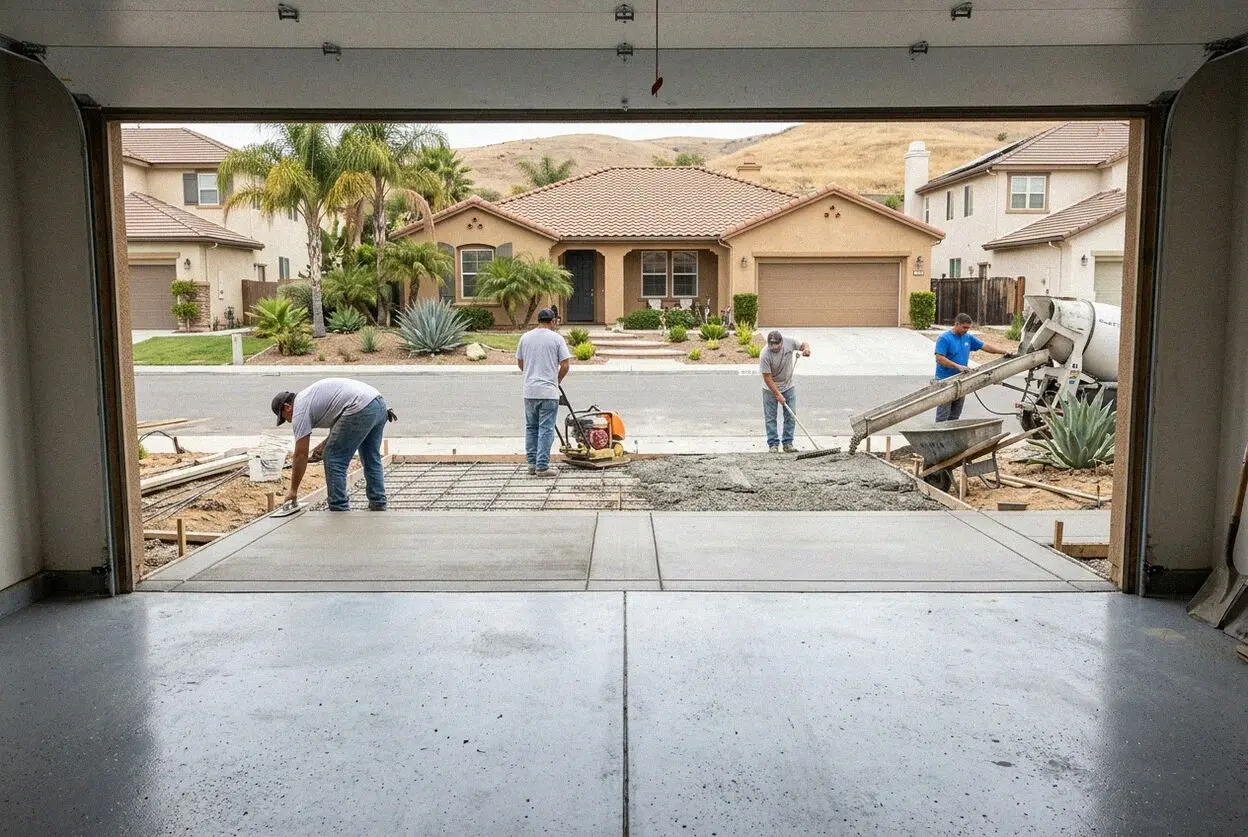
Concrete crew screeding a new bay floor inside a Huntington Beach garage

Salt, damp and sand

What a Huntington Beach Garage Floor Has to Take

A bay floor here has to shed water from above and hold it off from below, on sand that was leveled for a tract in the 1960s and has not been touched since.

The water from above is the beach. A car driven back from Bolsa Chica or the pier parks with salt water running off the wheel wells, and a marine layer morning adds a film of condensation to a slab that stayed cold overnight. Salt water on a broom-finished floor soaks in, and the salt it leaves turns a sound floor into a dusting one. So the mix is kept dense, the surface is closed with a steel trowel rather than a broom, and the floor falls to the door so the water leaves.

The water from below is the ground. The tracts between Beach Boulevard and the Bolsa Chica were leveled on dune sand and, nearer the Harbor and Sunset Beach, on lowland a few feet over the water table. Sand drains, which is a gift, but it also wicks, and a slab poured straight onto it with no sheet stays cold and damp from underneath through every marine layer season. That is why a gravel bed and a taped sheet go under every floor here, and under the slab for a garage conversion too.

From call to cure

How We Replace a Huntington Beach Garage Floor

Five stages, one crew, and the person who measures the bay is the one who strikes the fall on the pour. A bay that is turning into a room is permitted before the saw comes out, and the sheet is checked before the truck arrives.

1

Measure the bay, probe the sand

Scott Ferreira measures the floor, checks which way it falls, probes the sand at the door and the back wall, and writes the figure at the property.

2

Pick the floor and take a date

You choose the slab against what parks in it, decide on the sealer, and take a date. A conversion floor goes to the City for its permit first.

3

Saw, break out, compact

The floor is sawn clear of the footing, broken out and hauled, then the sand is probed again and compacted in lifts until it proves under a plate.

4

Sheet, forms and the pour

Gravel goes down, the sheet is lapped and taped, the isolation joint is set, and the concrete is placed, screeded to the door and troweled closed.

5

Cut, cure, seal and hand over

Joints sawn that afternoon, the slab kept damp for 7 days, the sealer on at 28, and the walk-through done with you against the estimate.

Behind the number

What Sets the Estimate on a Huntington Beach Garage Floor

Size opens the figure and the bay finishes it. Two floors of the same square footage can be a day apart in work once the door is up and the old slab is looked at, so nothing is quoted from a photo. Every estimate is measured and written on site.

A tract house bay

A two-car garage off Adams or Brookhurst is the standard floor, and what moves it is how far the old slab has settled and how soft the sand is.

A townhome or condo garage

A single bay under a 1970s townhome shares a footing with the neighbor's, so the saw cut, the isolation joint and the access all take more care.

A Harbor boat garage

A bay that takes a boat on a trailer or a lift is 5 inches on rebar rather than 4, and the ground near the canals is wet, so the gravel is deeper.

Sealers and finishes

A penetrating sealer is in every floor. A colored densifier, a polished finish or an epoxy over the cured slab is priced as its own line.

The visit and the written figure cost nothing, and the call to book a time for it comes within 1 business day. (657) 312-3698 or send us a message.

Ready to have your Huntington Beach garage measured?

Send the form or call, and someone rings back within 1 business day to fix a time. Scott Ferreira measures the bay, checks the fall and the sand, and writes the figure at your property. Nothing is signed that day and the visit is free.

Request a Free Estimate

Written on site · No obligation

By submitting, you agree to our disclosure and consent terms, including being contacted by Goldenwest Huntington Beach Concrete.

Floors we replaced

Three Huntington Beach Garage Floors, in Owners' Words

Three reviews left on Google, Facebook and the BBB, each about a garage floor rather than a driveway or a patio, and each naming what was wrong with the old one.

Google review

“Our 1968 garage floor had been dusting for years and the surface was flaking where the cars drip. They cut it out, compacted the sand, put a sheet down and poured a 4-inch floor that falls to the door. I hose the sand out now and it is dry an hour later.”

Marcus T. of SeacliffGarage floor replacement · Google · 2025
Facebook review

“We keep the boat on its trailer in the garage and the old floor had cracked under the axle. Scott poured 5 inches on rebar with a deeper gravel bed because the water table is close here, and cut it free of the footing. Two winters on, nothing has moved.”

Karen W. of the HarborBoat garage floor on rebar · Facebook · 2024
BBB review

“The bay is becoming a studio and the old floor was two inches below the house. They poured it level with the hall floor over a sheet and insulation, the inspector passed it first time, and the framers were on it a week later. The floor has stayed bone dry through a wet January.”

Luis A. of Oak ViewGarage conversion floor · BBB · 2026

Before you book

Garage Floor Questions Asked in Huntington Beach

What moves the figure, how long the cars are on the street, which bays the City permits, what is guaranteed and what goes into the slab, answered for a garage a short drive from the sand.

(657) 312-3698
  • What makes one garage floor estimate larger than another?

    Three things, and only one of them is the size of the bay. How the old floor comes out sets the first day, because a patched slab breaks out in pieces that each have to be sawn from the footing. What the sand is doing underneath sets the second, since a washout at the door has to be dug and refilled before it is compacted. What parks on the floor sets the depth and the steel. All three are measured at your garage.

  • How long are the cars on the street for a new garage floor?

    About ten days for a two-car bay. The saw and the breaker take the first day, the sand, the gravel and the sheet the second, and the pour and the trowel finish one morning of the third. After that the slab is kept damp for 7 days, which is when a car can go on it, and the sealer goes on at 28 days once the concrete has cured. The marine layer helps, since a slab that stays damp on its own cures better.

  • Does the estimate include taking the old floor away?

    Yes. Sawing the old slab clear of the footing, breaking it out, loading it and hauling it away is written into the figure, and so is the dig-out of any soft sand found under it. What sits outside the figure is named at the visit rather than added later. A water heater that has to be moved, a floor drain that has failed, or a permit fee for a bay becoming a room. The number you sign is the number on the bill.

  • Does a garage floor need a permit in Huntington Beach?

    Not when the floor is replaced inside the bay and the footings and framing are left alone, which is flatwork under the California Residential Code. The floor changes when the bay does. A garage becoming a bedroom, a studio or an ADU is a building permit from the City's Community Development Department, because the slab then needs a sheet, insulation and a level the plans set. We file it and meet the inspector.

  • Will homeowners insurance pay for a cracked garage floor?

    Almost never for wear. Dusting, scaling, settlement and shrinkage cracks are maintenance to every policy we have seen, so a floor that has broken down over fifty years of wet cars is the owner's to replace. The exception is a sudden covered event, most often a water heater that has burst and washed the sand out from under the slab. Photograph the floor before anything is broken out, and ask your carrier first.

  • What is guaranteed on a new garage floor?

    How it was built. The sand compacted, the sheet under it, the thickness poured, the isolation joint at the footing, the joints cut and the fall to the door, with those terms printed on the estimate before you sign. It is a written workmanship guarantee against defects in how it was built. Tire marks, oil stains, wear from a jack, and salt damage on a floor left unsealed against our advice sit outside it.

  • What concrete and sealer go into a garage floor?

    A 3,500 psi ready mix batched with less water than a patio gets, so the surface closes tight under the trowel, over a compacted gravel bed and a 10-mil polyethylene sheet. A 4-inch floor carries fiber in the mix, and a 5-inch floor for a truck or a boat takes number 3 rebar on chairs. The sealer is a penetrating silane rather than a film, because a film blushes white under damp and peels where the tires turn.

  • Do I have to be home while the garage floor is poured?

    Only for the measurement at the start and the walk-through at the end. In between the crew needs the bay emptied, the door working, water at a hose bib and the cars on the street for most of ten days. If the garage is the only way to a side yard or a laundry, tell us at the visit. The floor can be poured in two halves so there is always a way through, which adds a day and a joint down the middle of the bay.

Towns we pour in

Garage Floors Around Huntington Beach

The eight nearest towns on the list, with the straight-line distance from the office on Edinger Avenue beside each. Every floor is measured at the garage before a figure is written.

Show All Areas We Serve

Book a free measure of your Huntington Beach garage

Call or send the form and you hear back within 1 business day. Say what parks in the bay and whether it is staying a garage, and the visit can be booked for a day inside the same week, with the figure written before we leave.