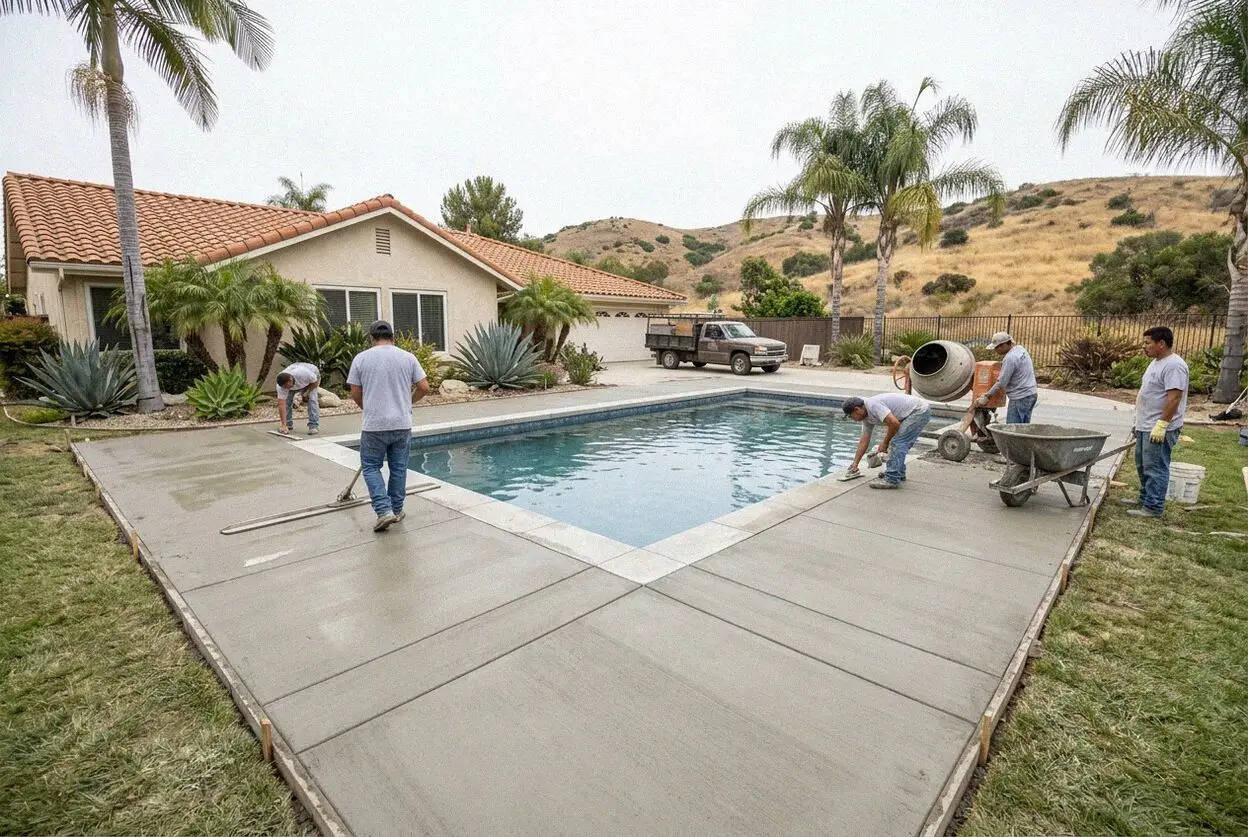
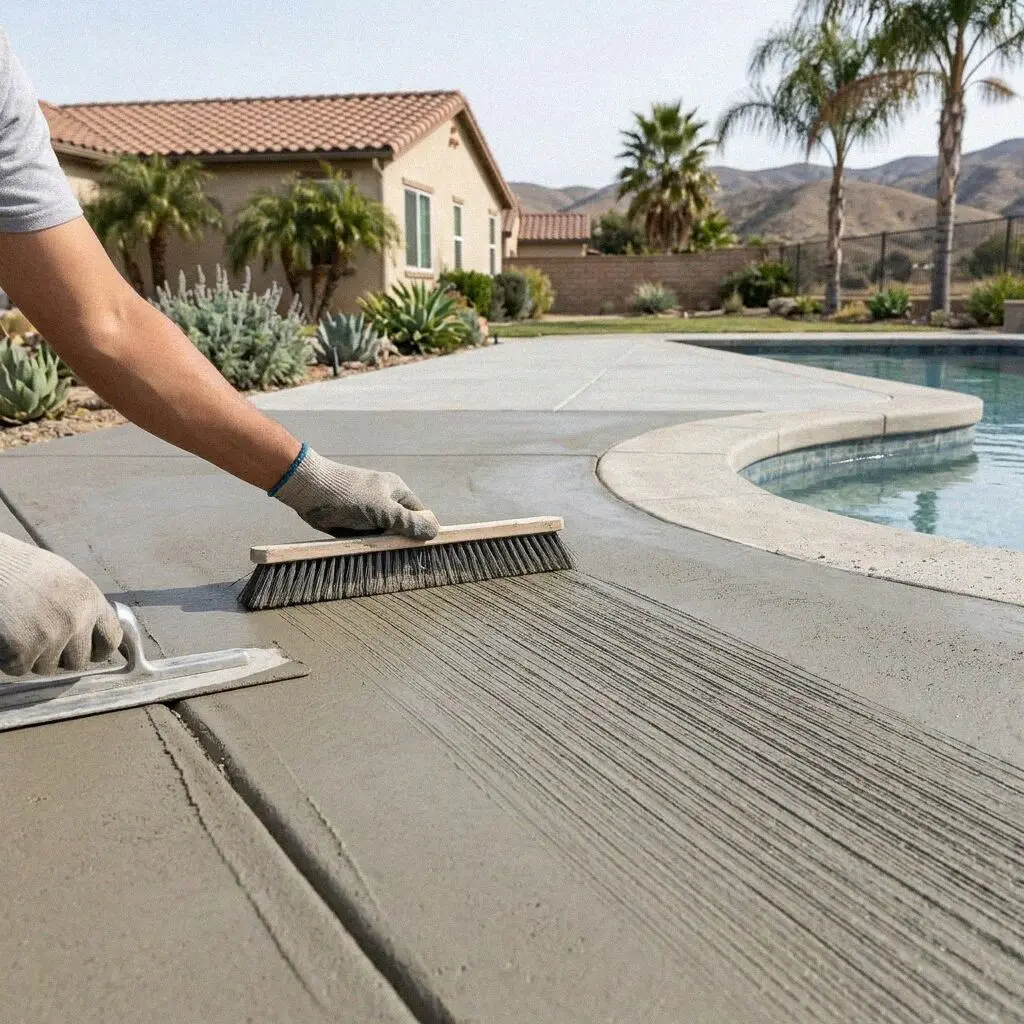
A pool deck is the most exposed concrete on a coastal lot. It is hosed, splashed and backwashed on every hot day, the onshore wind lands salt on it every afternoon, and it stands in the open with nothing to shade it, so whatever gets into the surface gets in faster than on a drive. Chloride is what matters, because once it reaches the steel the bar rusts, swells and lifts the top of the slab off in a sheet. So the deck is mixed with less water and sealed once it has cured.
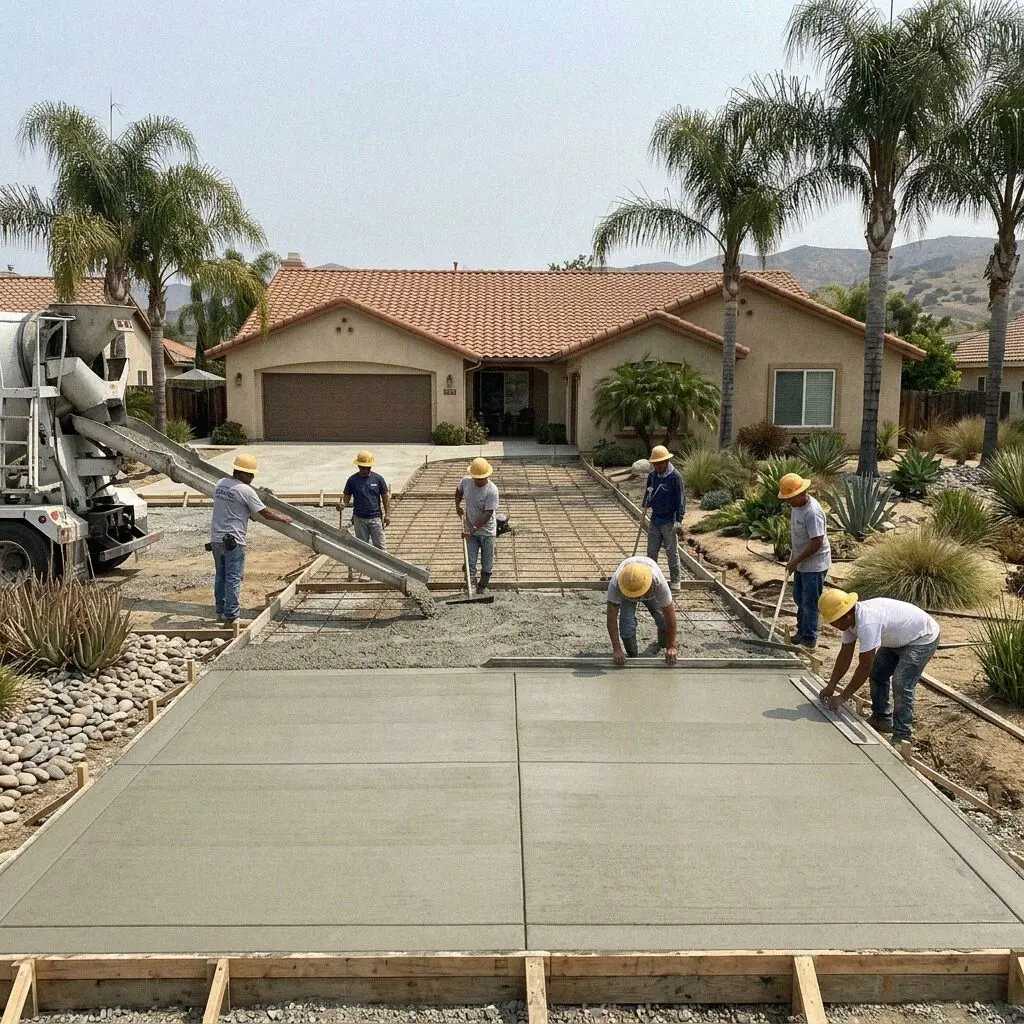
Most pools in Huntington Beach went in behind tract houses between the mid 1960s and the late 1970s, and a great many still carry their first deck, a thin slab under a sprayed topping patched a dozen times. Scott Ferreira has taken those decks out on canal lots in the Harbor and on the tracts off Brookhurst, and the steel that comes up is usually orange and half gone. The replacement is 4 inches on a compacted base, cut free of the coping, and made to be resealed.
The deck is poured under a CSLB C-8 concrete license to the California Residential Code, with liability insurance on every job. The bonding wire that loops every pool is found, tested and carried into the new slab, because the California Electrical Code requires a deck bonded to the shell and the pump. A gate moved to get the old deck out goes back to the barrier rules that day. Each deck carries a written workmanship guarantee against defects in how it was built.